
ONE-ON-ONE
Meow Wolf’s Vince Kadlubek left the company to rediscover himself. Now he’s back — and better than ever.
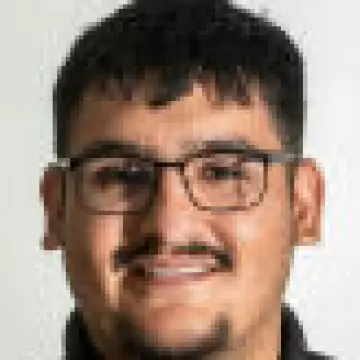
Published
Modified

Vince Kadlubek remembers seeing the success of the company he helped found explode in 2016 with Meow Wolf’s first permanent installation, House of Eternal Return, open to great fanfare.
But it was also a time when he knew he was losing a piece of himself — “my core,” he said — in the constant work it took to continue building out the Santa Fe-based immersive arts company into something bigger.
“I had a short fuse. I had a hard time connecting with people, even people who were some of my closest friends,” said Kadlubek, 42, a co-founder of Meow Wolf. “I was wrapped up in a lot of insecurity and I defended my insecurities with characteristics that I wasn’t proud of.”
Those insecurities led Kadlubek to step down as Meow Wolf’s first CEO in 2019, a surprise to the public as the company was on its way to building more installations in other parts of the U.S.
Kadlubek knew he had to reconnect with and rediscover who he was and what got him here — those “northern New Mexican values,” he said, “things that I grew up with, … things that I had lost.”
Kadlubek will be the first to tell you that the journey is still ongoing. But he’s doing better these days and is back with the company in the role of chief vision officer — a position he says is “core to the creative process” — as Meow Wolf grows into its fifth permanent exhibition in Houston this month and sixth in 2026 in Los Angeles.
Tell me a bit about yourself. Where are you from? What was your first job?
“Born and raised in Santa Fe. Santa Fe and New Mexico are deeply (embedded) in my DNA, and I absolutely love it here. I never want to leave. … My first job was washing dishes at Pizza Hut in Santa Fe right on Cerrillos Road. It’s since been turned into a Mexican restaurant called Los Potrillos. That was my first gig; I was 15 years old. I worked there for about a year, and then bounced around from thereon for the next 15 years. I basically was in and out of every restaurant and hotel you could imagine, waiting tables, bussing tables, working night audits — just trying to make ends meet here in Santa Fe.”
How did Meow Wolf get its start?
“Our spirit was born out of a place called Warehouse 21, which was a teen arts center that we all grew up with. Undoubtedly, that’s the source of our spirit. After Warehouse 21 went through its transition into a bigger building and into a bigger organization, … we felt the need to continue to have a DIY space for art and music and social gatherings and entrepreneurial activity, all of which Warehouse 21 really cultivated. But we needed our own space.
We also recognized that Santa Fe’s identity had become fairly rigid in how it expressed itself through art and cultural events and through tourism representation and whatnot. We were young people born and raised in Santa Fe who felt like our interests, our energy and our subculture did not have representation.
Meow Wolf was an effort by all of us to have a space and have an entity that could channel this DIY punk rock, millennial creative expression. And so that was it. We all committed to 100 bucks a month to pay on the lease and called ourselves Meow Wolf.
We pulled the name out of two hats — ‘meow’ came out of one hat; ‘wolf’ came out of the other. We all voted on it and then we just started to hang out and express ourselves inside that space (a 1,000-square-foot location on the corner of Second Street and Cerrillos Road was the group’s first meeting spot). … We were there for about six months, and then we moved down the street into a little bit of a larger warehouse and grungier warehouse, where we could be messier and we could kind of do our own thing.”
What was your role in starting Meow Wolf?
“So we operated as an informal entity for like six years. Scratch that — we operated as a truly informal entity for three years, and so not a business, not even a nonprofit; we were just a social group.
I thought that I was going to be an artist; I thought that I was going to be creative, but I quickly ended up being the guy who helped to generate donations. I often say when we would invite the public into our space to see what we’ve created, I would be the one who would be running around with a cardboard box with a hole cut at the top, and the word ‘donations’ written on the side in Sharpie, asking people to please donate so we could help keep it sustained. That role ended up evolving into, I was the one who was writing grants for Meow Wolf to try to get some funding, or I was the one who was writing press releases to the Santa Fe Reporter and The New Mexican and the (Albuquerque) Journal to get some attention towards us. So it became a bit more of an administrative, business-oriented role, even before it became a business.
In 2011 this reached an even greater point when we did a project called ‘The Due Return,’ which was a giant ship that we built that was housed at a place called the Center for Contemporary Arts. That project needed real funding and needed real donations and needed a nonprofit partner. It needed an agreement between Meow Wolf and the CCA. We needed a real marketing strategy, and so I ended up taking on all of that type of work, while the more brilliant artists actually created the brilliant work. And so that’s where that relationship really started to define itself even more.”
Your team opened this first permanent installation in Santa Fe in 2016. How did that come together?
“After we did ‘The Due Return,’ there was a time from 2011 to 2013 when it was really hard for us to find our way. We formed a business and I started to think about a business plan that could kind of change the way that Meow Wolf thought about the work that we did. I started to sketch out this business model, really based on (whether) we could do a permanent piece, a permanent exhibition, and we could charge a ticket price — could it work?
And so I developed that business model, and then started looking for a space that we could maybe rent, or maybe somebody could buy. We ended up finding this bowling alley that we currently exist in (House of Eternal Return) and then, of course, the miraculous moment of the story, is that I took the business model and I took the property that we had found thanks to George R.R. Martin, the author of ‘Game of Thrones,’ and he became the most significant first domino to fall in this whole thing. His willingness to see the vision of what it was that we were developing and to believe in it was the sort of monumental step that then accelerated us into being an actual business.”

You guys open this permanent exhibition and you’re the CEO of this company, but you leave the role a few years later in 2019. Why?
“We saw tremendous success from 2016 onward, and I had to quickly make decisions as CEO around growing the company — employing a bunch of people, raising more money, signing leases in Las Vegas and Denver, and then ultimately raising a very large amount of money from a private equity firm in New York to support the ongoing development of (those) projects. All of that took a massive toll on my psyche. After closing the round of capital, I felt like a shell of myself. … I recognized that I was not the right person to lead the company, and so I begged our board of directors to let me step down because I just knew that I was not in a healthy place for myself or for the company.”
Was there any soul-searching when you left that role?
“After I stepped down, the next four years and ongoingly today, it’s been a process of me understanding my insecurities and understanding how I respond to my insecurities, and building a better toolset that’s based in recognition of humanity and recognition of other people’s humanity and collaboration and cooperation with others.
Very significantly in that period of time, a couple things I’ll mention happened that were hugely helpful in my personal development. I started to seek out therapy. I participated in psychedelic therapies that were paired with talk therapy — traditional psychoanalysis talk therapy — and did a few different sessions over the course of a few years. That was wildly transformative to my being. And that was the first time that I really understood the therapeutic power of psychedelics.
Simultaneously to this, I also started to hang out with a friend group (of) people who grew up (here) … and carry northern New Mexican values, Hispanic values — like things that I grew up with, things that were really true to my core, things that I had lost while on this crazy business trajectory (of) sitting in boardrooms and talking to investors in L.A., New York and San Francisco. … A huge part of my therapeutic process was reconnecting with the language and the perspective and the ethos of northern New Mexico, and I was lucky enough to have a social group that was people that I love who were able to kind of bring me back to my core.”
Why did you decide to rejoin the executive team at Meow Wolf?
“In the time that I had stepped aside from my CEO position, I got a chance to see the Las Vegas project open; I got a chance to see the Denver project open, and they’re both mind-blowing projects.
The brilliance of Meow Wolf — the brilliance of the team at Meow Wolf — is undeniable. I say and I believe (that) Meow Wolf is the greatest creative company in the world. I put us right up there with any other creative company. I couldn’t help but want to be involved in it, to be around that energy, to be part of the trajectory, to be a part of the team, to work alongside such brilliance — it’s the best opportunity in my life for creative expression. And so I worked hard to try to become part of the team again.
I was a consultant for the company for a couple years and I worked closely with our new CEO, Jose Tolosa, and I worked closely with some other executives, especially our chief creative strategist, Anne Mullen. Over those two years, I learned a lot about myself, and I learned a lot about those insecurities, and I got re-triggered, and I was self-aware again, of like, ‘Oh my gosh, here I go again, like, going into that person that I don't want to be.’ And I think I finally got to a place where I feel like I can be back at the company and contribute and be part of the team without those detrimental aspects coming to the surface.”
How do you see this role as chief vision officer?
“Core to the creative process, whether it’s an art project or the development of the company or making the world a better place, is having the courage to see where you want to go. And oftentimes where you want to go is unbelievable — it’s who you’re going to be in five years. Who you want to be in five years seems impossible compared to where you are today.
And so it takes a process, and it takes a certain energy, and it takes a certain level of communication, to develop a future vision, and for everyone to be excited about it, and for everyone to believe in it. And so that’s always been the thing that I am most excited about. And I think Meow Wolf is at a point now where we’ve developed these incredible exhibitions, but there’s more we can do.”


