
TECHNOLOGY
In Sandoval County, Project Ranger aims to remake hypersonic missile production
Castelion Corp. says site could be country’s ‘premier hypersonic production facility’

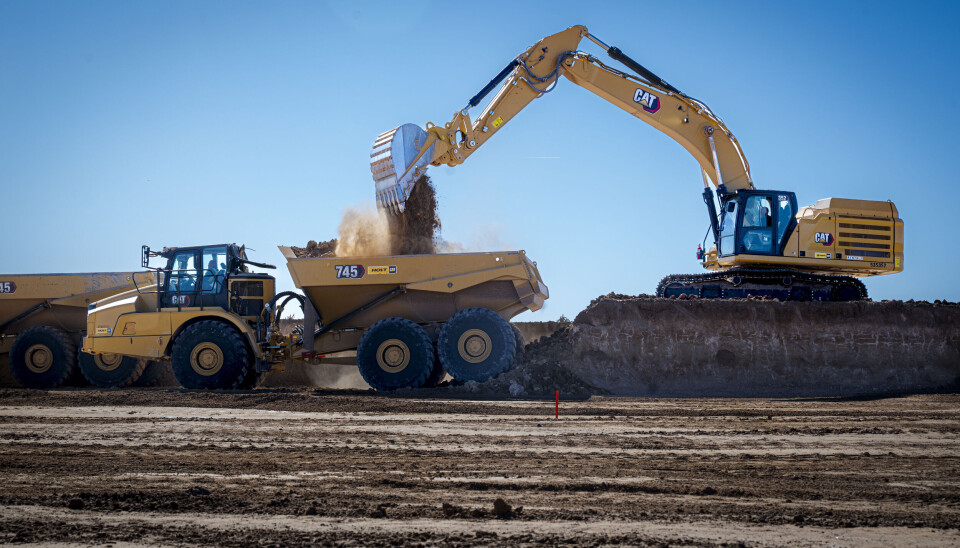
SANDOVAL COUNTY — Packed dirt and a few building foundations on a 1,000-acre stretch of undeveloped land in Sandoval County look dramatically different every time Andrew Kreitz visits.
“We set the goal of moving really quickly, but every time we are boots on the ground, to be honest, it’s really impressive how fast the teams out here are moving,” said Kreitz, the co-founder and chief financial officer of Castelion Corp., as he looked out toward construction workers on-site Tuesday. “We set aggressive goals, and they’re hitting them.”
Kreitz is determined to establish Castelion’s presence in New Mexico, envisioning this dusty stretch as his company’s next strategic step.
“There’s so much potential in the state, education, national labs and whatnot, but our hope is that we pull more suppliers out. Our hope is you end up with a nexus of talent here,” Kreitz said. “We’re optimistic about it — we’re very excited.”
After months of speculation, Castelion announced its selection of Sandoval County for its primary production site, named Project Ranger, in November. The facility will complete the scale buildout of the company’s first product, a long-range hypersonic missile, dubbed Blackbeard.

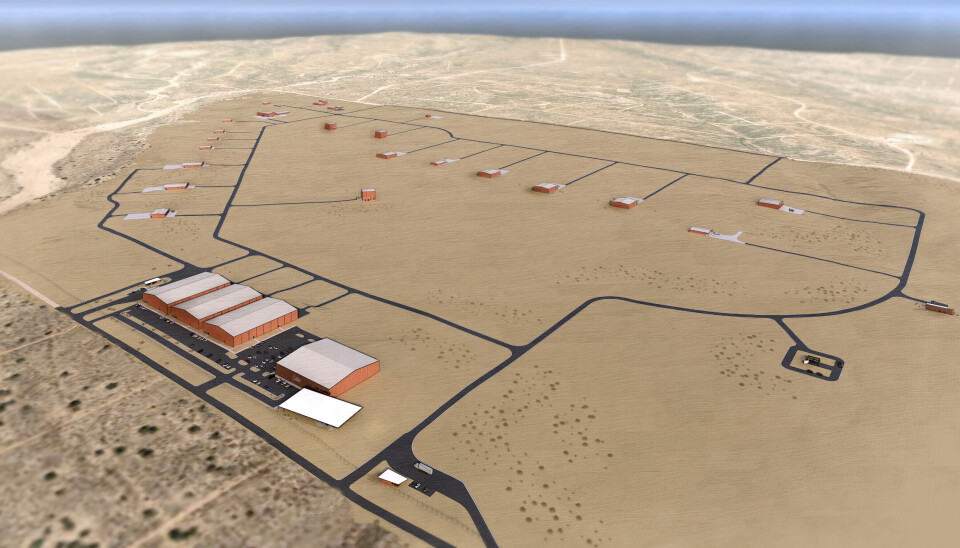
Project Ranger’s campus, in which Castelion is investing at least $150 million, will consist of 22 buildings. Kreitz said each will house different manufacturing processes, including work with solid rocket motors, integration and testing. Primary construction will finish later this year, with the first Blackbeard missiles delivered in 2027.
Castelion’s New Mexico ambitions come as the Trump administration races to build U.S. weaponry stockpiles through a push for increased defense spending, looking to compete with adversaries like China. The company is hosting a ceremonial groundbreaking on Wednesday, which will be attended by Gov. Michelle Lujan Grisham and other state and local officials.
Bryon Hargis, co-founder and CEO, believes Castelion’s 1,000-acre campus is the largest dedicated hypersonics production facility in the nation — possibly in the world. But the company’s goal was not to have the “vanity to be able to say that,” he said, rather to ensure the safety of all Americans.
“This is going to be the country’s premier hypersonic production facility — and it’s right here in Rio Rancho, New Mexico — I’d be proud of that,” Hargis said. “This absolutely will matter to the safety and security of the entire country and our foreign partners.”
Whittled down from roughly 20 other locations across the U.S., Kreitz said some of the biggest factors that went into choosing the Sandoval County site were a willingness from state and local governments to understand the company’s mission and a workforce with the skillsets needed to quickly ramp up production.
“The history that the state has in contributing to these types of capabilities is second to none,” said Sean Pitt, Castelion co-founder and chief operating officer. “Having a talent pool (that) has direct experience with hypersonics, in particular, was super important to us. We found both of those things here.”
New Mexico is home to military installations like Kirtland Air Force Base and White Sands Missile Range. With Sandia National Laboratories and Los Alamos National Laboratory as anchors, the state under Lujan Grisham’s leadership has targeted further expansion in the aerospace and intelligence manufacturing industries.
“I would say there was another site that was close, it had a good workforce but less specific skillsets, but their government just wasn’t as quick or as active,” Kreitz said. “I was really impressed by how much (New Mexico municipalities) work hand-in-glove on everything.”
Sandoval County Manager Wayne Johnson, reiterating what he said last year when New Mexico was one of a few choices, said Castelion’s presence “could be on the scale of” another Intel Corp., which employs thousands of workers in the area. The site will generate $650 million in economic impact over the next decade, state and company officials have said.
“We feel like this is really going to benefit the overall wealth of the community,” Johnson said. “This has been a tremendous opportunity for Sandoval County, for Rio Rancho, for the state of New Mexico. …I think they’re going to be here for a very long time.”
The facility’s buildout will employ around 400 construction workers. Castelion has said it will support 300 full-time employees with an annual average salary of $100,000.
In order to stay competitive in the site selection, Sandoval County commissioners approved $125 million in industrial revenue bonds in August. The state, city and county also offered roughly $10 million in economic development funds to go toward the project.
But Johnson said the incentive package, along with the state’s deep roots in defense technologies, made New Mexico an “attractive location” for Castelion’s selection.
“They love the fact that we are proximate to Sandia National Labs; they love our university system; they love the fact that Spaceport America (is) here; they love the workforce and the educational system here in Rio Rancho, (which) would create a pipeline of employees,” Johnson said. “It was a lot of different things — not just one thing here in Sandoval County.”
Founded in 2022 and valued at $2.8 billion, Castelion aims to “change the way the United States develops and manufactures hypersonic missiles,” Kreitz said. The company recently raised $350 million in series B funding and has secured over $100 million in contracts with the U.S. military.
Kreitz, in an interview last week, called hypersonics a “critical capability for the United States.”
“I think the thing that would shock a lot of Americans, to be honest, is we are actually very behind in hypersonics,” he said. “Our adversaries, particularly China, are — without exaggeration — decades ahead of us.”
After the end of the Cold War and Persian Gulf War in the early ’90s, Kreitz said there was an idea that the U.S. wouldn’t “need these kinds of systems anymore.” He said that, along with the consolidation and closure of defense companies across the country, created a sense of peace that no longer exists.
Echoing the Trump administration, Kreitz said, “We’re remembering that there are hostile actors out there. … The world is a dangerous place once again.”
“We’re seeing that we took our eye off the ball that our adversaries didn’t,” he added.
Pitt said, currently, the U.S. might only be able to build as many as two dozen hypersonic weapons annually. Castelion’s New Mexico site plans to drastically grow those capabilities through a major boost in manufacturing, he said.
“If you’re trying to deter our adversaries, you need hundreds or thousands of them,” Pitt said. “That’s what this site is going to enable, is the country actually having enough to prevent bad actions on behalf of our adversaries around the world.”
Rather than focusing on the country’s lag in the production of hypersonics, Kretiz said he and other Castelion founders saw a “cause for optimism.” The company, which touts the ability to build and test its products at low costs, stands to grow significantly under President Donald Trump’s administration, which is proposing $1.5 trillion in military spending in the upcoming fiscal year — up from roughly $1 trillion in FY26.
Thomas Kahn, a professorial lecturer of congressional and presidential studies at American University in Washington, D.C., said this significant increase in spending has “never happened before,” even during Trump’s first term.
Defense spending is typically politically linked, Kahn said, with Democrats more likely to put money into nondefense services – think education or health care.
“There’s kind of an unwritten understanding that as one increases, so will the other, but that ratio has been broken under the Trump administration because of the huge, new defense (spending) increase,” Kahn said. “That is absolutely not being matched; nondefense is being significantly cut.”
In response to the influx of new money, Kahn said military branches like the U.S. Army and Navy are seeking new weapon development, including hypersonic missiles — Castelion’s wheelhouse — drones and advanced munitions.
“These smaller companies (that) don’t have the same lead time, don’t have the same bureaucracy and red tape, and they can move faster,” Kahn said. “Sometimes they can produce weapons at a cheaper price and more quickly — it doesn’t always work out that way — but there is certainly an attraction to it.”
Castelion’s founders are not new to the game. Kreitz, Hargis and Pitt are all former employees of SpaceX, a company founded by Elon Musk that designs, manufactures and launches rockets and spacecraft.
As excavators and other construction vehicles plowed through the site on Tuesday, the founders of Castelion stood nearby, reflecting on the long path that had led them to this moment.
“This initial investment,” Hargis said, “is only the beginning.”
Hannah García covers tech and energy for the Journal. You can reach her at hgarcia@abqjournal.com.


