
PART 4: The struggles holding New Mexico back



Published
Modified

Editor’s note: In a 5-part series, Business Outlook will take an in-depth look at New Mexico’s economy, its major drivers and obstacles. In Part 1, we focused on oil and gas, the national laboratories and the history of the state’s economy. Part 2 was about outdoor recreation, international trade and economic development challenges. In part 3, we talked to business leaders about what they would like to see changed in the state. This week, we dive into what economic developers say makes it challenging to recruit and retain businesses in New Mexico, as well as what advantages the state has over others.
In 2021, officials with the Department of the Air Force’s Strategic Basing Office toured Kirtland Air Force Base with an eye for choosing the permanent location of the U.S. Space Command.
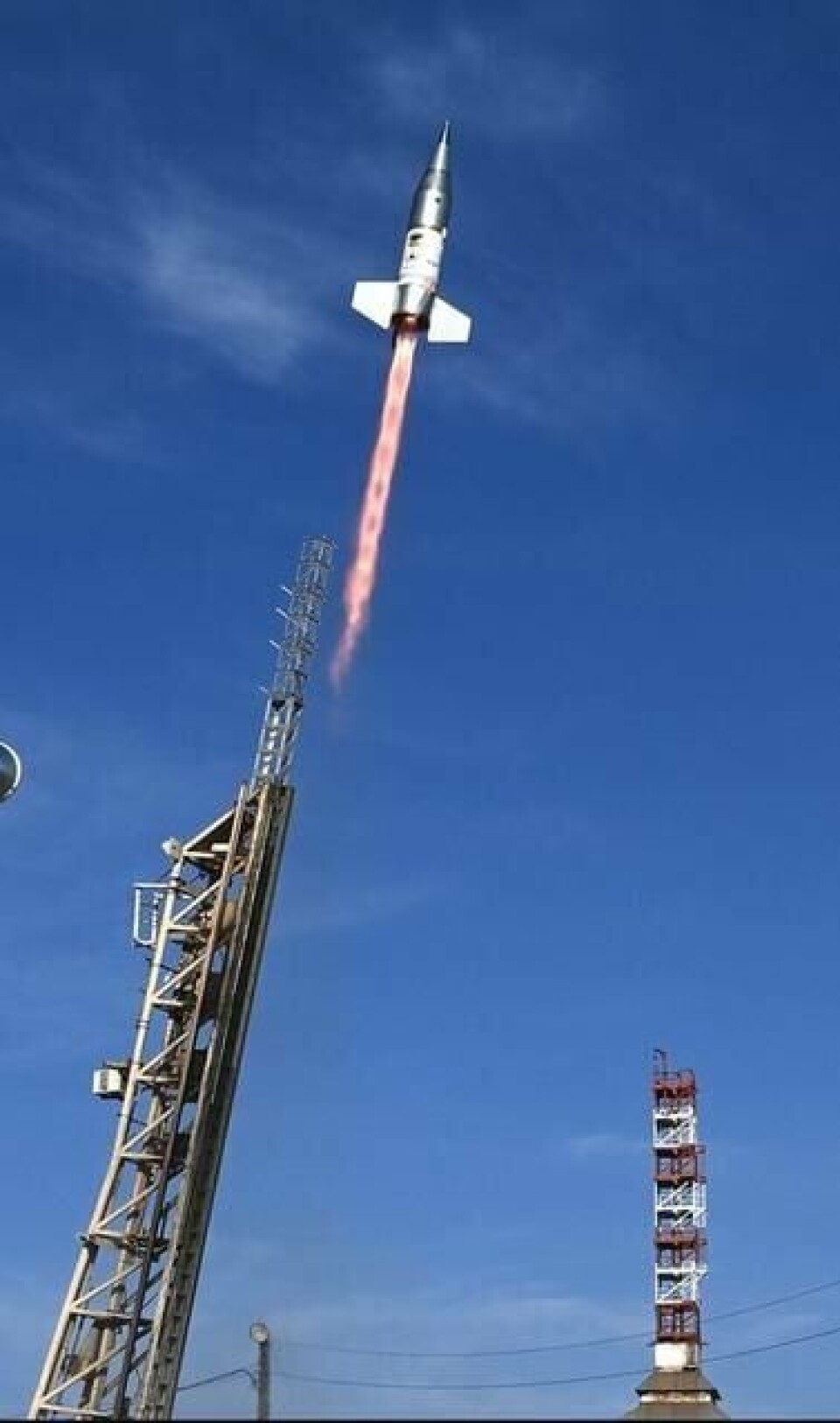
Albuquerque had made the short list of six cities for the site — which would bring 1,000 high-paying jobs and billions of dollars of government spending over time. And Albuquerque made sense; New Mexico in some ways was the birth place of American aerospace, is home to Spaceport America and has numerous space-related scientists and engineers who work for the Air Force Research Laboratory and national laboratories, among other assets.
It didn’t come. Military officials originally selected Huntsville, Alabama, as the site before reversing course last year and deciding to leave the command at its temporary site at Peterson Air Force Base in Colorado Springs.
Amanda Aragon, the executive director of NewMexicoKidsCAN, which advocates for education policies, wasn’t surprised by the decision. She said Kids Count the last eight years has ranked New Mexico 50th in the country in K-12 education. And the military hold in high regard childhood wellbeing and education when deciding where to deploy missions. Both Colorado and Alabama outperform New Mexico in education and many other childhood factors.
“Should we ever go through the base realignment process, we know that one of the indicators for the military is educational outcomes,” Aragon said. “That should be alarming for a state that has three major military installations.”
Poor education outcomes for young students can be a deterrent when companies are considering to locate or expand in New Mexico. Poor education, infrastructure, a lack of capital for startup businesses and communication among different entities are some of the struggles that are holding the state back, according to leaders of different industries, according to business leaders.
Small business as the backbone
There are 162,000 small business throughout the state, said John Garcia, the New Mexico district director for the U.S. Small Business Administration. The majority cater to tourism and outdoor recreation industries, though some work with different technologies.
Garcia said in some ways he’s seen New Mexico small business change philosophies since the COVID-19 pandemic.
“We’re seeing changes,” he said. “Post-COVID, we realized that we have a global economy that we participate in. I don’t think people really saw that.”
The SBA offers small businesses technical counseling assistance, access to capital by helping them secure loans and education on procurement processes for federal contracts.
What is holding the state back? Garcia said New Mexico should have more manufacturing sites. Expertise from the national laboratories and military bases should be better capitalized, potentially increasing manufacturing, he said.
However, several problems should be addressed before manufacturing could take off.
“If a manufacturing firm wants to move to New Mexico or a company wants to expand, they’ll look at distance to the airport, education is a big deal and crime,” he said. “If those things are out of control, they are not going to bring their employees here.”
Garcia said during the pandemic, people became used to working remotely through Zoom or other programs. He said the SBA now uses electronic meetings regularly to provide assistance to entrepreneurs in the rural parts of the state. That has allowed the SBA to reach more entrepreneurs. Prior to the pandemic, SBA would hold conferences that were attended by about 100 people. It now does virtual seminars that can reach more than 1,000 people in a meeting.
However, such work is limited because some parts of the state don’t have access to reliable internet.
“Our infrastructure has to be built,” Garcia said. “We’re one of the few states that doesn’t have large broadband access. It’s hard for me to (offer businesses resources) in rural New Mexico or Navajo Country if they can’t even open a laptop and get internet access.”
Garcia said too often people who work in economic development are fractured from one another, particularly in northern and southern New Mexico.
For example, there’s an intermodal facility in Santa Teresa, which means it’s a place where companies can transfer goods by rail, ground or air. Garcia said that creates business opportunities for small businesses throughout the state. A company could produce widgets or panels that are used to move the goods, potentially creating a successful small local business to create products that the state currently imports.
“If I can get Albuquerque to look south of Belen and get Las Cruces to look north of Socorro, we got to hit,” Garcia said. “But we don’t think like that.”
A glaring problem
Aragon said Kids Count data found New Mexico has ranked 50th in K-12 education for the last eight years. Kids Count uses the National Assessment for Educational Progress, a nationwide math and reading assessment, to determine the state-by-state rankings.
New Mexico does have some positive policies for its education system. The state’s funding formula prioritizes funneling money to schools with at-risk students. Other states, she said, rely more on the school district’s property tax values. She also credited the state for increasing the budget for schools and other childcare and child wellbeing initiatives.
Aragon’s organization advocates for more early and strengthened intervention programs with students, teachers, principals and parents if a student is falling behind.
“Some schools are doing those interventions and some classrooms are getting those interventions,” she said. “But they’re not being strategically implemented across the board for all the kids that need them.”
She said the state needs to make a cultural shift if it is going to improve education.
“I think an unintended consequence of us being 50th for eight years in a row is that, unfortunately, I think we’ve come to believe that this just might be the way that it is in New Mexico, she said. “We’re working really hard at NewMexicoKidsCAN to change that perception and that narrative.”
She said some school districts, such Gadsden Independent Schools, Bloomfield School District and Bernalillo Public Schools, have made significant strides and have some of the best student outcomes in the state.
“What are (those school districts) doing? It’s not revolutionary. They set goals. They have strategic plans for their schools or districts, which come with measurable goals. They monitor towards those goals. And when they’re not making progress, things change.
“Most business leaders are like, ‘that’s just normal work.’ It is actually fairly unique in education systems, unfortunately.”
She would favor policies that would end social promotion. For example, if a third grader can’t read efficiently, he or she would repeat the grade instead of moving along. However, Aragon said there should be interventions going back years to try to get the student proficient.
Improving the education system could be and economic driver in more ways than one, she said.
“There could be a kid sitting in a high school in New Mexico that could be the person that starts the first company that becomes a Fortune 500 company that’s headquartered in New Mexico,” Aragon said. “That kid isn’t going to be able to accomplish that if they’re not reading at grade level if they can’t do college-level math.”
By the numbers
Sometimes it’s just as simple as the numbers.
Doug Campbell, an Albuquerque native and board member of the University of New Mexico Foundation, founded two international companies from the Denver Front Range area that he exited after they went public. One is an electric vehicle company and one works with low Earth orbit satellites. He said there’s plenty of research and development talent in the state coming out national laboratories and the state’s research universities.
However, he said Albuquerque and New Mexico don’t have as many entrepreneurs to serve as mentors or investor dollars as other cities and states.
“The challenge is that there is not a large ecosystem of seasoned entrepreneurs with a catcher’s mitt on waiting to catch that R&D and turn it into commercially viable products and rapid high-growth businesses,” he said. “And that’s what I’ve zeroed in on here. How do we fix that?”
And that lack of investor dollars and experience can force a local company to make a tough decision.
“The challenge that a lot of companies in New Mexico face is that they can raise a few million dollars early on. And then once they go toward the big bucks, your series As, your series Bs, they have a tendency to be drug out of state. Investors want to be in more burgeoning areas,” Campbell said. “The companies end up having to recruit out of state for CEOs. And guess what? If they don’t end up moving to New Mexico, guess what’s going to happen? That company is generally going to move to where they are.”
Dale Dekker, the founding principal and brand ambassador at Dekker Perich Sabatini architect firm, said site readiness and the local talent pool can discourage growth.
Dekker said businesses looking to expand or move to Albuquerque face many unknowns. How long it will take to approve and permit a project depends on a variety of factors, he said. That can cause business owners to chose other states and cities over Albuquerque.
Additionally, even when buildings are completed, businesses then need to hire talent.
The state’s population growth was essentially flat from 2010 to 2020, according to U.S. Census data. The state’s population 18 years and younger declined during the same time period, while the state’s elderly population increased.
“If you build (a business) and then can’t hire and employ the right skill level of people, that doesn’t matter,” he said.
The New Mexico Economic Development Department identified nine target industries to grow and diversity the state’s economy:
- Aerospace
- Biosciences
- Cybersecurity
- Film and television
- Global trade
- Intelligent manufacturing
- Outdoor recreation
- Sustainable and value-added agriculture
- Sustainable and green energy
Most of those industries require advanced science, technology, engineering or math degrees.
“I think that with the proper investments, we could move (New Mexico higher education) from good to great,” Dekker said. “Mediocre education is not going to cut it in the future.”


