
Featured
Gold rush: You don't have to stray far from ABQ to enjoy fall's foliage
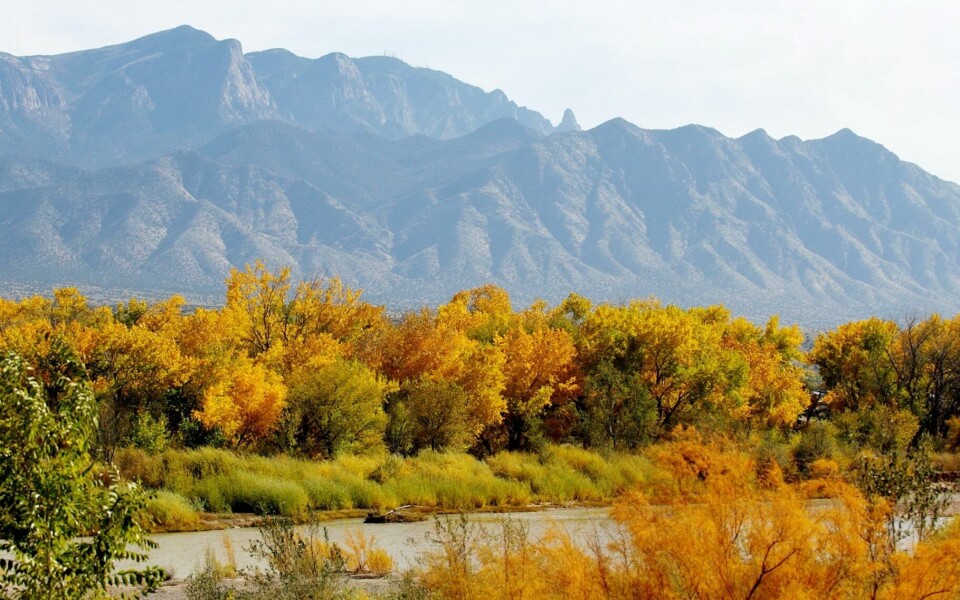


Albuquerque fall foliage enthusiasts don’t necessarily have to venture far to enjoy all that the season has to offer.
There are a number of parks within the city limits that can provide the obligatory colors that accompany autumn’s arrival.
“We’ll always kind of have the bosque, and we’ll get some pretty good gold colors out of them,” said city forester Sean O’Neill. “That’s always a quite essential place to go and see that color change. The West Bluff Park is a great place where people can go and actually have an overlook on the west side of town that oversees the bosque and the Sandias, as a big Balloon Fiesta spot.”
Gold rush: You don't have to stray far from ABQ to enjoy fall's foliage
According to O’Neill, there are plenty of other parks throughout the Duke City that provide a diversity of trees that will shift into the scenic hues of the season. Some other suggested spots include Tiguex Park, Montgomery Park, Black Arroyo Park, Seville Park, Academy Hills and Desert Springs Park, among others.
“(Some) really good trees that change color (in Albuquerque) would be the Chinese pistache. … We do have some bigtooth maples, some boxelders, which are also maples that will have different types of color change — it’ll go kind of reddish, purplish. And then (we have) hybrid elms, (which) will all slightly change a different color. We have more and more of those being planted around town.”
Those seeking a specific layout of where certain trees are located can visit letsplantabq.org and navigate to the site’s tree inventory map. There, one can track trees by species and park.
“There’s a legend on the right side, and then it’ll say ‘tree species,’ and it’ll pull up every single tree in a park, and that’s where you can turn species on and off,” O’Neill said. “It’s a very user-friendly tool to play with. That’s kind of really trying to get the public to know that’s a tool they can use because it works from your phone.”
Another way to appreciate the fall colors is to travel the Sandia Crest Scenic Byway, which is located along New Mexico Highway 536 and is believed to be the highest scenic drive in the Southwest.
“You can just see a lot from the highway,” said Kerry M. Jones, air & water quality specialist/meteorologist for the Forest Service. “I think that’s a big reason for the popularity. You just get the variety — (including) the aspens, which are always typically vibrant when they change. It’s just a close proximity to the city, but then it also has such a change in elevation over a short distance.”
The Cibola National Forest and National Grasslands have four mountain districts within a short drive of Albuquerque that offer various landscapes for fall viewing. The Fourth of July Canyon, located in the northern Manzano Mountains of the Mountainair Ranger District, is also a popular spot for leaf peeping, as visitors can see hues of red, yellow and orange from hardwood maple and oak trees.
If one wants to enjoy fall colors a little bit later in the season, a venture to the southern part of the state might be in order, where changes will still be ongoing through October and November. One potential option is the Sunspot Scenic Byway, a 16-mile route that begins in Cloudcroft and traverses south through the Sacramento Mountains.
“That one’s a standout for several reasons,” says Amanda Fry, public affairs officer for the Lincoln National Forest. “You’ll have several vistas, just giving you a beautiful overlook of the forest, but then it overlooks the White Sands National Park. So you just have an amazing view of the entire valley from those vistas … It takes you all through the Sacramento Ranger District. So you get views of all the autumn foliage, and it really is beautiful. Then you can head on up to the Sunspot Observatory area, which also has a beautiful overlook there.”
Fry adds that the Guadalupe Ranger District can be quite scenic during the late fall season. This includes the Sitting Bull Falls picnic site.
“It’s the Chihuahua Desert, as far as terrain goes,” Fry said. “But it is also quite beautiful in the fall.”


