
LOCAL GOVERNMENT
Albuquerque City Council votes down proposal to raise gross receipts taxes
Change would have raised $113 million for budget, brought raises for city workers

Published
Modified
The Albuquerque City Council voted down a proposal Monday to raise gross receipts taxes by a fraction of a percent.
The ordinance would have raised $113 million a year to invest in infrastructure projects, reduce city-imposed fees and give raises to the lowest-paid city employees. The money would have been generated by raising GRT from 7.62% to 8.1%, a difference of 0.4875%.
The ordinance was voted down by a 8-1 vote.
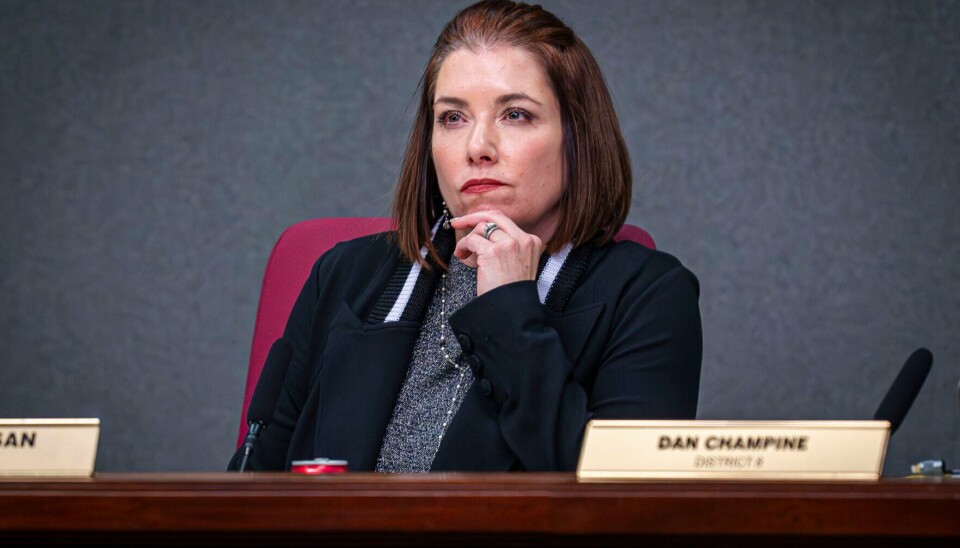
Councilors Brook Bassan and Joaquín Baca spearheaded the proposal, though they would later vote against it after amendments "killed the spirit" of the bill.
“I'm not proud to sponsor a tax increase,” Bassan said. “In fact, it's the last thing I ever thought I would do. But after careful thought, I truly believe this will allow us to close some of the massive gaps our city is facing. It will allow us to move forward and become a better version of what we already have.”
Bassan told the crowd that raising taxes was a decision of last resort, after trying and failing to cut what she called a “bloated budget” for two years as chair of the Committee of the Whole.
Baca said that raising taxes is “investing in ourselves.”
After the bill was amended to reduce the tax increase, both Bassan and Baca ultimately voted against their own bill. Councilor Tammy Fiebelkorn, the sponsor of those amendments, was the only councilor to vote for the bill.
The amendment meant that the tax hike would have yielded around $30 million a year, down from $113 million.
Fiebelkorn said that the original tax hike would impact the poorest residents all the while funding councilors’ “vanity projects.”
Councilors Stephanie Telles and Dan Lewis, who rarely agree, both said that the city budget was mismanaged and that a tax increase was a rush fix.
What is GRT?
Gross receipts taxes are paid by businesses, though they may be passed on to consumers in the form of higher prices.
GRT is paid when selling, leasing or licensing property; granting franchising rights; performing services; and selling scientific and technological services that were researched and developed in New Mexico, according to the state Taxation and Revenue Department.
A higher GRT may, at times, discourage a business from opening in a certain municipality. Meanwhile, a lower GRT can sometimes encourage development.
For example, in the last legislative session, lawmakers eliminated GRT on affordable housing projects to incentivize their construction.
However, slashing GRT can come at a price.
GRT constitutes a sizable percentage of the city’s operating budget and an even larger share of its general fund. In 2025, 40% of the city's revenues were derived from GRT.
How does Albuquerque compare?
Albuquerque has a lower GRT than many cities and communities in the state.
Of the five most-populated cities and towns in New Mexico, Albuquerque has the second-lowest rate at 7.62%. Neighboring Rio Rancho has a lower tax rate by 0.18%
If raised, Albuquerque’s GRT would still be lower than in Santa Fe, Las Cruces, Roswell and Farmington.
On the whole, New Mexico is among the minority of states that have GRT.
For that reason, it's difficult to compare out-of-state cities similar in size to Albuquerque, such as Milwaukee and Tucson, because they are in states that don’t impose GRT.
Proposal draws debate
Tax changes, as always, are controversial.
More than 30 people signed up to speak in favor of or against the tax changes.
“Think of the single mothers, think of the retirees, think of the disadvantaged poor. They’re the ones who bear the burden of your regressive GRT,” said retiree and public commenter Debbie Reynolds.
Other public commenters said the change would have the opposite effect for some low-income families.
While consumers might have seen a minimal price increase, it would have changed city sanitation worker Jason Sanchez’s day-to-day life.
The proposal would have given raises to the lowest-paid city employees, many of whom work in the sanitation department.
“People who pick up the trash every week perform one of the most essential services in our city, yet they are often overlooked when it comes to fair pay, safe working conditions, and respect for the risk they all take every single day,” Sanchez said.
After amendments sealed her ordinance’s fate, Bassan apologized to city employees in the audience.
“I had a proposal that's written for everyone to see that would have gotten you $56 million a year in compensation,” she said.
Gillian Barkhurst is the local government reporter for the Journal. She can be reached at gbarkhurst@abqjournal.com.


