
Featured
Former Las Cruces officer found guilty of voluntary manslaughter in shooting of Teresa Gomez

Published
Modified
LAS CRUCES — A jury on Thursday afternoon found former Las Cruces police officer Felipe Hernandez guilty of voluntary manslaughter in the 2023 death of Teresa Gomez.
He was immediately taken into custody to await a sentencing hearing, where he could face an 11-year prison sentence.
The verdict was announced to a packed courtroom before state District Judge Richard Jacquez on the fourth day of Hernandez’s trial for shooting Gomez as she drove away from him during an early morning encounter in the parking area of a public housing complex. Gomez was killed by a single round from Hernandez’s weapon.
Hernandez, 45, was charged with second-degree murder, but the jury found him not guilty on that count, convicting him on the lesser charge instead with a firearm enhancement penalty.
The conviction of a police officer for murder or manslaughter is extremely rare — between 1-5% of all cases, depending on the source. By some accounts less than 1% of the roughly 1,000 cases where people have been killed by law enforcement officers annually see convictions, Sigrid Vendrell-Polanco, a St. Mary’s Law assistant professor, told San Antonio TV network KSAT Thursday. Or less than 5%, according to research from the Henry A. Wallace Police Crime Database at Bowling Green State University in Ohio, which has been tracking such crimes since 2005.
In the early morning hours of Oct. 3, 2023, Hernandez was patrolling Burley Court alone, in uniform, on his bicycle when he encountered Gomez and her friend, Jesus Garcia, sitting inside her car. Footage from Hernandez’s body camera recorded the interaction as he asked Gomez to step outside the vehicle and cursed as he recognized her companion from previous interactions.
The tension mounts as Hernandez asks about a disassembled paintball gun that resembles a firearm, and as Gomez initially resists leaving her vehicle until Hernandez aims his Taser at her. Hernandez accuses them both of trespassing in an angry interview punctuated with profanity as he threatens to have Gomez’s car towed and to make her life “a living hell.” Gomez later apologizes repeatedly, answers questions and asks the officer to “be nice.”
Later, as Hernandez begins making notes in a notebook, Gomez asks if she can sit down in her car, and Hernandez agrees. She then turns the engine on and begins to back the car out of the parking space, while her driver’s side door remains open, striking the officer.
Hernandez backs away, briefly caught in the door’s path because of a parked car behind him. He then draws his handgun, orders her to stop, and fires three rounds into the car as it begins to drive away from him.
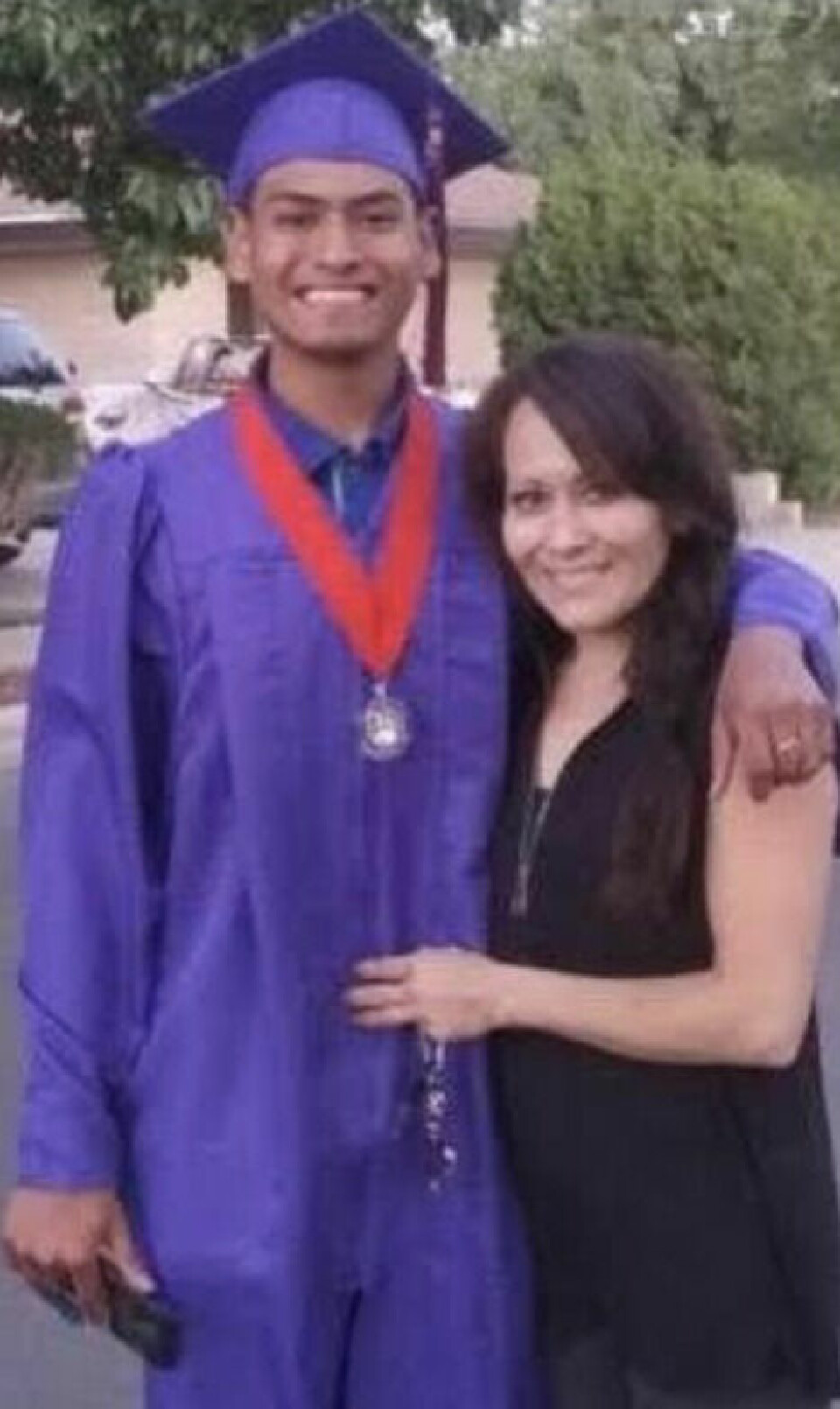
A crime scene investigation found that the first round Hernandez fired entered Gomez’s back on her left side, damaging ribs, vertebrae and both lungs, killing her. Last year, the city paid $20 million to settle a civil lawsuit brought by Gomez’s family.
Over the four-day trial, District Attorney Fernando Macias and Deputy DA Tomas Medina argued that Hernandez presented inappropriate anger from the start of the encounter and was not conducting a legitimate investigation or a lawful detention when he detained the pair. They characterized his demeanor as abusive and bullying, enough to cause a reasonable person of Gomez’s size, compared to Hernandez’s burly frame, to feel fearful.
The prosecution argued that the shooting was “the culmination of eight minutes of anger” in which Medina said Hernandez “got mad and stayed mad. … He created this situation for himself.”
Hernandez, who took the witness stand for most of Wednesday, acknowledged his anger and profanity while testifying that, when Gomez unexpectedly reversed her car, he was placed in danger and responded quickly to stop the threat, as he had been trained. The defense presented Hernandez as a dedicated peace officer and U.S. Army war veteran who was involved in an ongoing community policing initiative addressing unauthorized visitors, drug use and minor quality-of-life crimes in the area.
While the door appears to strike Hernandez as Gomez pulls out of the parking space, the only documented injuries entered as evidence from the incident were a scuff mark on Hernandez’s forearm and a pen mark inside his elbow.
Barry Brodd, a retired law enforcement officer and instructor on police uses of force, who testified Wednesday as an expert witness, found flaws in Hernandez’s interaction with Gomez but opined that the shooting was justifiable.
On Thursday, defense attorney Jeff Lahann argued to the jury that Gomez was responsible for the circumstances leading to her death, even mentioning repeatedly that a toxicology report had found the presence of methamphetamine in her body.
Macias delivered the state’s rebuttal, telling the jury, “Teresa Gomez is not on trial. The effort to shift away and make it her responsibility … is completely misplaced.” Additionally, he pointed to video evidence and Hernandez’s admission that he did not render medical aid to Gomez once he realized he had shot her.
“He was the perfect example of government overreach and oppression,” Macias said.
In essence, the jury was charged with deciding whether Gomez’s killing was malicious and unprovoked or whether there was sufficient provocation to convict him of voluntary manslaughter. They also had the option of acquitting Hernandez.
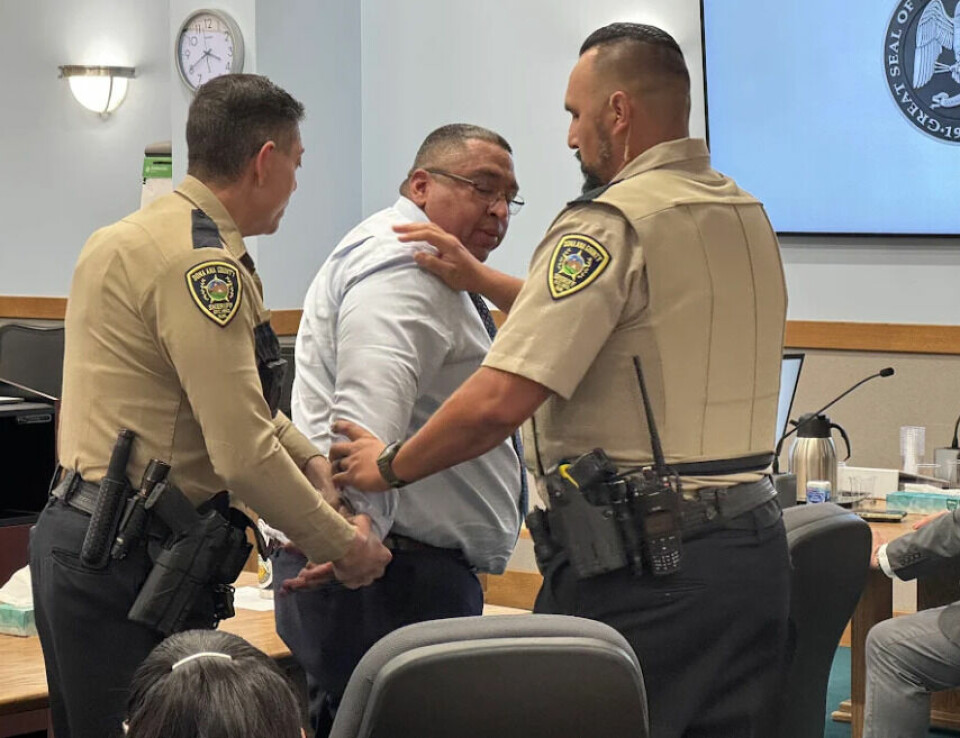
The jury deliberated for a little more than four hours before announcing they had reached their unanimous verdict. Lahann stood next to Hernandez with one hand on his client’s back as Jacquez read the verdict.
Prosecutors immediately asked Jacquez to take the former police officer into custody, a request the judge granted, directing officers to place him in restraints and lead him from the courtroom as family members and supporters of both Gomez and Hernandez wept at the outcome.
A sentencing hearing has not yet been set. Lahann declined to comment after the court adjourned.
Macias welcomed the jury’s verdict in a statement following the trial’s conclusion, while maintaining he believed the evidence presented at trial supported the second-degree murder charge.
“This verdict affirms that law enforcement officers, like all members of our community, are accountable for their actions. No badge and no title place anyone above the law,” Macias said.
Medina thanked the jurors and said, “The loss of Ms. Gomez’s life is a tragedy that has deeply affected her family, our community, and the integrity of public trust. … We will continue to pursue justice with integrity, compassion, and respect for the rule of law.”


