
LOCAL COLUMN
OPINION: Who really destroyed New Mexico's health care system
For years, New Mexico’s media and political establishment have repeated a familiar charge: Former Governor Susana Martinez destroyed the state’s mental health network. That narrative has been repeated so often it has hardened into conventional wisdom.
But if that is the standard, then a harder question must be asked.
Who destroyed New Mexico’s health care system today?
What New Mexicans are experiencing now is not a narrow behavioral health failure frozen in time. It is a full-scale statewide health care breakdown unfolding in real time, under current leadership, after years of record budgets and unchecked spending.
New Mexico is not a poor state. It is absolutely a poorly run state. And nowhere is that more evident than in health care.
Doctors are leaving the state at alarming rates. Medical malpractice settlements are reaching historic highs. New Mexico has repeatedly failed to pass a medical licensure compact that would allow out-of-state physicians to practice here and ease shortages. It has failed to enact meaningful malpractice reform, even as liability costs drive providers away. These are not ideological debates. They are self-inflicted wounds.
Behavioral health, the issue most often weaponized against prior administrations, is worse today than ever. Fragmented delivery, inconsistent outcomes and instability persist despite billions spent and repeated reorganizations. If the goal was improvement, the results tell a different story.
Medicaid is the clearest example of dysfunction. Enrollment numbers swing unpredictably while costs rise at a meteoric pace. New Mexico now spends billions annually on Medicaid, yet outcomes lag and provider participation continues to erode. More money is flowing through the system than ever before, and fewer doctors are willing to participate in it.
The New Mexico Medical Insurance Pool now costs taxpayers more than $150 million a year. Rural hospitals are closer to closure than at any point in recent memory. Santa Fe has already lost a major provider. And now even Presbyterian Healthcare Services, the largest health care system in the state, is showing signs of strain.
That should stop everyone cold.
Presbyterian’s situation is not an isolated corporate story. It is a mirror of the health care ecosystem statewide. When the largest system begins to buckle, the issue is not marginal management. It is policy failure at the top.
There will be plenty of finger-pointing in the months ahead. Hospitals will blame reimbursement rates. The state will blame workforce shortages. Regulators will blame providers. But none of this happened overnight. These conditions were not created in the last few months or even the last year. They are the product of nearly a decade of mismanagement, deferred reforms and political comfort with spending more instead of governing better.
If Martinez is expected to wear the scarlet letter for decisions made years ago, then fairness demands the same scrutiny be applied to the sitting governor, Michelle Lujan Grisham, and the policies enacted under her leadership.
Accountability cannot be selective. It cannot be frozen at a politically convenient moment. Health care systems do not fail because of one decision or one administration. They fail when warning signs are ignored and hard reforms are avoided.
So what does competent reform look like?
It starts with governing, not grandstanding. It means stabilizing Medicaid so enrollment, reimbursement and outcomes are predictable and sustainable. It means passing a true medical licensure compact to bring providers into New Mexico instead of driving them out. It means meaningful malpractice reform that protects patients while keeping physicians in practice. It means rebuilding behavioral health with accountability and continuity. And it means recognizing that rural hospitals cannot survive on talking points alone.
Most of all, it means accepting responsibility.
New Mexico is not a poor state. It is absolutely a poorly run state. Until leadership is willing to admit that mismanagement, not money, is at the heart of this crisis, nothing will change.
Health care in New Mexico does not need another villain.
It needs adults in the room.
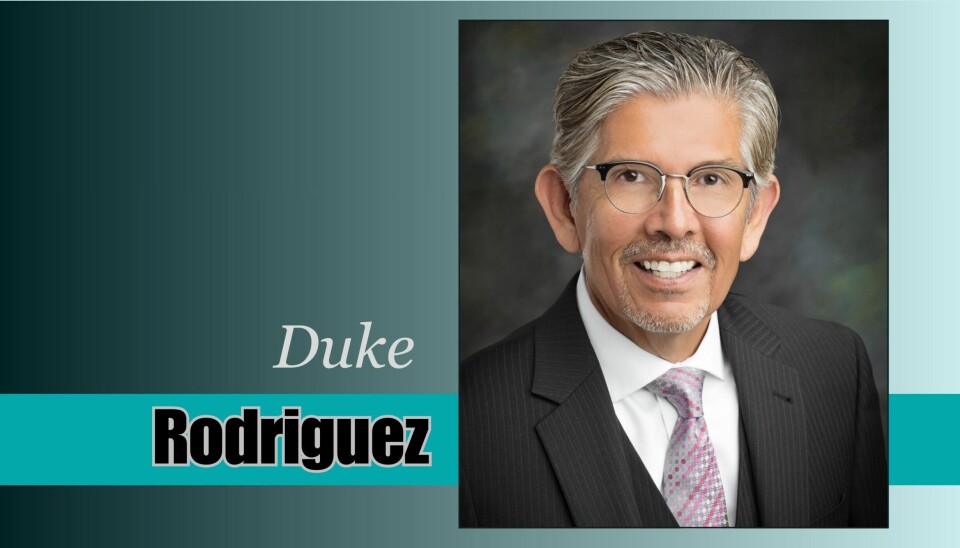
Duke Rodriguez is the president and CEO of Ultra Health and a New Mexico Republican gubernatorial candidate. He was previously the secretary of New Mexico’s Human Services Department and a senior executive for the Lovelace Health System.


