
Featured
4 questions with Roadrunner Food Bank’s new director of tribal relations

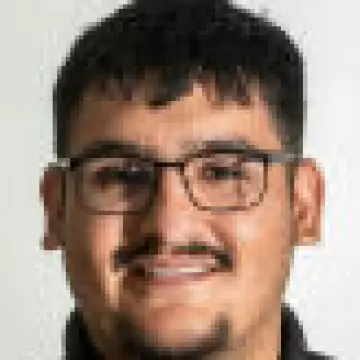
Candice Griego poses for a portrait on Tuesday, Oct. 15, 2024. Griego is the new director of tribal relations at Roadrunner Food Bank.
Published
Modified
Candice Griego says she doesn’t want to change the way tribal communities view their own foods or the way in which they live.
“It’s really for us to get out to the community and then offer healthy and nutritious food so that we can help prolong their lives and hopefully preserve their culture and traditions,” Griego said.
Griego, a Zia Pueblo member, is the new director of tribal relations for Roadrunner Food Bank of New Mexico, a new position that has Griego out on the road getting to know tribal communities across the state.
The position, which she’s held since July, comes as Roadrunner has begun making inroads with those communities across New Mexico. The food bank since the spring introduced several new food distributions in the Navajo Nation, with plans for more, and Griego will help lead those efforts.
It’s the perfect fit for Griego, who brings with her nine-plus years of experience in health care, particularly in outreach efforts for the state’s managed care organizations, or MCOs, that run the Medicaid program.
Griego was a peer support specialist for Molina Healthcare before she started as the food bank’s SeedCorps program director in November 2023.
The Journal sat down with Griego to discuss what she plans to do in her new role, what food insecurity looks like in tribal communities and the importance of a food bank.
This interview has been edited and condensed for clarity.
Is food insecurity a big issue in New Mexico’s tribal communities?
“I don’t want to (assume) that every tribal community is experiencing food insecurity. But the communities that are more in the rural areas where ... there’s just limited access to healthy and nutritious food, or just even grocery stores, those are the primary areas where there is a significant amount of food insecurity just because of that lack of accessibility. Those are the primary areas where I’m prioritizing to get food out.
Right now, I’m working with chapter houses in the Navajo Nation … that are either on a reoccurring, monthly food distribution basis, or a little bit more fluid, where I have to connect with them every other month to see if they are available to have a food distribution at a certain time of the month. That’s primarily where my focus is right now, just in those rural areas where they are considered to be in a food desert.”
I know you’re new to this role. But can you tell me what your job entails on a day-to-day basis?
“So fairly new in the position. It’s fairly new to the food bank. Right now, my role and my goal — my short-term goal — is to make the introduction of myself and my role to the different tribal communities in New Mexico. There are 19 pueblos, the Navajo Nation and the Apache tribes, so it’s my role right now, my goal, to make those introductions (and) to let the tribal leaders and the tribal communities know that I’m available to them. And if there is an interest of having a food distribution, to get them set up with that initially and then to eventually hand off the distribution to that community so that they’re able to manage the distribution on their own.”
Roadrunner is one of the premier food banks in New Mexico. How important is it for this organization to get involved with this work of branching out into tribal communities?
“We have a big focus here in the metro area, and we want to expand out to not only the metro area but also to the rural areas that also include different areas that are not tribal communities.
We want to get out to the locations that have food insecurity and who are in need. It’s part of the mission to just get food out to everybody that needs food. And Roadrunner wants to meet that mission.
And creating this role is the first step to ensuring that we’re hitting those different communities that are in need and who are experiencing these food insecurities.”
It sounds like in your past work you’ve done a lot of community outreach. How does that experience help you with this job?
“Being out in the community in previous roles, I was able to develop relationships and create a network that I’ve taken along with me throughout my career, wherever it is that I’m employed. I’ve already established these relationships where, if I need to make a connection with somebody in the state, or with somebody out at a managed care organization, or a tribal community, I’ve had that experience of going to these different agencies, organizations and communities where I’m familiar and they know who I am. It might be a different organization that I’m with, but they know who I am as a person. I’m a familiar face.”


