
Featured
Jalen Dominguez grew up a Lobo. Now, he’s helping shape the future of UNM Athletics

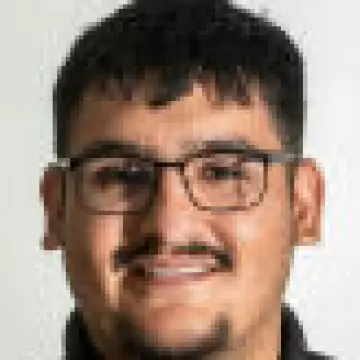
Jalen Dominguez is the deputy athletic director and chief revenue officer with University of New Mexico Athletics.
Published
Modified
It was at New Mexico State University, where he played basketball, that Jalen Dominguez’s career began to take shape.
Dominguez helped create the first-ever internship for students with the NMSU athletics director, a “shadow program for the leadership team at New Mexico State, where I would go department by department, spend time with all the leaders in the different areas,” he said.
“I had no idea as a student athlete what was happening behind the scenes, but as I got to do it, it stoked a fire and a passion in me, and an avenue for me to really combine all of my passions into one,” said Dominguez, the deputy athletic director and chief revenue officer with University of New Mexico Athletics.
Dominguez’s new role with UNM Athletics, which he’s held since March, has him on the front lines. He oversees fundraising, multimedia rights, concessions and ticketing, just to name a few areas.
His efforts, alongside others in the department, including UNM Athletic Director Fernando Lovo, have made headlines in recent days. Just this month, UNM announced kids under 12 can get in for free — with some caveats, of course — to Lobo football games, and the lowering of prices on some concession items as ways to incentivize fan turnout.
“We’ve been strategic, aggressive and innovative in ways that we can find new avenues to generate excitement and engagement,” Dominguez said. “Sometimes those efforts might not lead to immediate revenue, but if we can find these new platforms that allow our community to engage and feel a part of the Lobo family, we know it’ll come.”
What are your earliest memories of the Lobos?
My parents met at UNM, and so I grew up on campus — running around the duck pond and in the different buildings. But my earliest memories would be probably somewhere in that 4- or 5-year-old time frame where my dad would take me to Lobo football and basketball (games), and it was a big deal for my brother and I to get to follow him through the tailgates, to walk around in the Pit. From a very early age, when our season tickets came in the mail, that was a huge day in our house.
Did you grow up in a sports household?
It was, very much so. My dad was my youth coach in many sports. My brother and I lived outside. … We’d be doing football, basketball, baseball, soccer.
You went to NMSU to play basketball. What was that like?
Lou Henson was the coach when I was a senior in high school, and when I was looking for what’s next, I’ve always been someone who gravitates toward challenges. I had opportunities to play at smaller schools, but I wanted to test myself at the Division I level. I really wanted to be a coach, and I thought Lou Henson was one of the best in the business. When they gave me an opportunity to be on the roster, I was really excited, so I headed down to Las Cruces.
Was Lou Henson your coach?
Coach Henson actually retired right before my freshman season, and we had Tony Stubblefield. Then I played two years under Reggie Theus and one year under Marvin Menzies.
You worked at UCLA for a short time. What was that like?
I was an account executive in ticket sales. The day-to-day was making 100 phone calls. I would show up every day, get my lead list and my goal was to finish it by lunch. That way, I could figure out strategic ways to make new contacts and drive more revenue. We had a sales team and a sales board, and I knew that I had to have my name at the top of it if I was going to get to that next opportunity. So I would roll up my sleeves every day, make 100 phone calls for about a year, and sell tickets, secure donations and do everything I could to push the brand of UCLA.
It sounds like you have put yourself in some vulnerable positions.
I’ve never been afraid of a challenge. I’ve never been afraid of failure. I’ve been taught from a young age to always pursue my goals and my dreams relentlessly, and so sometimes that’s uncomfortable — but you have to be uncomfortable to grow. From a young age — whether it be trying to play Division I basketball, or trying to get a job, or trying to get someone to invest in something that I’m passionate about — I never wanted to let the fear of rejection or the fear of failure cloud my vision and get in the way of my goals.
What does being the chief revenue officer and deputy athletic director mean to you?
The work is very meaningful to me. For me to be able to attack the job the way I do, it has to be personal. I do believe I work in higher education (and) to do it in a state that I’ve traveled around and through — obviously my ties to both New Mexico State and UNM — means a lot to me, and it’s something that I’ve always felt a duty, if you will, to want to find ways to repay a community that’s treated me, my family, so well for so long.
How important is revenue growth in the new world of college athletics?
There’s no guarantee that if you drive revenue, you’re going to be successful. But there is a guarantee that if you don’t, you won’t. I look at it as a barrier for entry. When we talk about ticket sales, fundraising, NIL, if we’re not competitive in those spaces, we don’t provide our coaches, our athletes, our programs, the baseline, foundational needs that they have to have for them to pursue championships. And so I’ve looked at it as the growth of revenue continues to provide the growth of opportunity, and gives our kids and our programs a chance to be successful. There’s a direct correlation between investment and outcome. It’s been amazing to watch our community and all the different ways they continue to invest, and I think they’re seeing the outcomes coming from it.
Does success on the field contribute to the health of New Mexico’s economy?
We recently conducted an economic impact study, and the numbers were pretty staggering, and I’m not sure they’re even all-encompassing yet. But the direct economic impact of Lobo athletics on this community is so great — it’s over $250 million a year. Outside of that, I truly believe Lobo athletics has a direct impact on the vibrancy of Albuquerque and New Mexico. New Mexico is a better place when the Lobos are doing well, and so we feel, as a department, we have the ability to make a much greater impact than just what happens within our own walls, and that’s a driver for us as we do what we do every day.
What motivates you?
It starts with my family. I’ve been very fortunate to have an amazing set of parents who have loved me, invested in me, supported me in everything I’ve done. That has now motivated me to do that for my wife and for my son, Luke, and my daughter, Grace. I’ve learned that regardless of my environment, I cannot and will not be happy unless they are happy; and if they are happy, regardless of my environment, I also will be happy. So, my motivation starts and ends every day as a husband, as a father, and that allows me to put my best foot forward as a professional.
What’s the best advice you’ve ever received?
Your priorities are reflected by your time, and your time reflects your priorities. For me, that has been something I’ve carried with me, that has served me well, professionally and personally. To find something that is meaningful that I’m passionate about to give myself to — whether that’s been my family, my faith, my profession — I’ve always made sure first that my heart was in it before I could try to put my head in it.


