
Featured
Massive Senate spending bill promises major impact on New Mexico

What’s in President Donald Trump’s “One Big Beautiful Bill” and how will it affect New Mexicans? For some it will mean tax cuts, for others it could mean life and death. Here’s a list of all the ways the bill could affect the Land of Enchantment.
Trump’s bill narrowly passed the Senate by a vote of 51-50 with all Democrats, including both New Mexico senators, joining three Republican senators in voting no. Vice President JD Vance broke the tie. The White House said the bill is the “largest tax cut for working- and middle-class families in U.S. history” and will fund a crackdown on undocumented people living in the U.S., while repealing some of what Republicans say were the most damaging parts of former president Joe Biden’s infrastructure plan, which invested heavily in renewable energies.
Opponents warn that the bill contains provisions that will disproportionately affect states such as New Mexico that have large numbers of Medicaid and supplemental food program beneficiaries and the rural hospitals that treat them. New Mexico is one of four states on the Mexico border that are likely to feel the effects of changes in immigration policy. The bill also takes aim at energy policies likely to affect the state.
“Senate Republicans had a choice: stand with working families or bend to billionaires,” Sen. Martin Heinrich, D-N.M., said in a statement following the vote. “They chose greed, cruelty, and a callous disregard for the people they represent. New Mexicans and all Americans will suffer for it.”
Medicaid and rural hospitals
The Senate package would impose $1.2 trillion in cuts, largely to Medicaid and food stamps, by implementing work requirements on able-bodied people, including some parents and older Americans. State officials estimated Tuesday that 90,000 New Mexicans could lose Medicaid coverage caused primarily by increased eligibility checks and increased work requirements that would start in 2027. As of May, about 38.5% of New Mexicans were enrolled in Medicaid.
Medicaid cuts threaten to close six to eight rural New Mexico hospitals in coming years with hospitals in Gallup, Taos, Las Vegas and Clayton at particular risk, state officials warn.
SNAP
The bill contains sweeping changes to the Supplemental Nutrition Assistance Program, known as SNAP, which provides food benefits to more than 460,000 New Mexicans.
The New Mexico Health Care Authority estimates that the bill would cut between $224 million and $352 million in SNAP benefits to the state. The agency estimates that about 58,000 New Mexicans will lose SNAP benefits. It will also increase the state’s share of the federal match from 50% to 75%.
The bill would require able-bodied adults under age 65 to work 80 hours per month, with exceptions for those with children under 10. It also limits SNAP benefits to lawful permanent residents.
Changes to student loans, Pell Grants
The bill makes sweeping changes to student loans, with the most considerable calculated savings being an estimated $271 billion, achieved by limiting payment options based on income. It changes qualifications for Pell Grants, notably the elimination of those grants for students with full-ride scholarships and changes to how students’ and families’ financial need is calculated.
Oil and gas
If passed, oil and gas royalty rates on federal lands would drop from 16.67% to 12.5%. Additionally, coal development royalty rates would decrease from 12.5% to 7%. Royalty rates are payments operators make to extract public resources, and the money goes to the U.S. Treasury — and is one of the largest nontax sources of revenue for the federal government, according to the Center on American Progress.
Barbara Vasquez, board chair of the Western Organization of Resource Councils, described the move as “a ruthless giveaway to the fossil fuel industry.”
“The bill will rob taxpayers of a fair return and deprive rural communities of billions in funding we rely on for schools, roads and other basic infrastructure,” she said in a statement. The legislation would also require the U.S. Bureau of Land Management to hold quarterly lease sales for oil and gas development. BLM is leasing out upward of 22 million acres to the extractive industries, and the Wilderness Society estimates 88% of New Mexico federal lands are still up for grabs for oil and gas drilling.
Wind and solar
As for renewable energy, residential and commercial clean energy and energy efficiency incentives would get phased out more quickly under the bill. Tax credits, some of which Biden’s Inflation Reduction Act had poised to run through the early 2030s, could vanish as soon as the end of this year or, in other cases, by 2028.
It would put pressure on local solar manufacturers to sign New Mexicans up for solar panel installations sooner rather than later, as the elimination of the residential clean energy tax credit would increase the return on investment for major purchases like rooftop solar by years. Terminating the 30% credit after this year would also save $77 billion for the federal government, according to The New York Times.
While renewable energy officials have called the bill unnecessarily punitive to clean energy industries, Larry Behrens, spokesperson for the energy organization Power the Future, said it finally brings renewables to a level playing field with oil and gas.
“When we look at the fact that wind and solar will now have to stand on their own, and people will get a real feel of what the real cost is for those intermittent electric generation (sources), then they will start to see the failure they are,” Behrens told the Journal.
Planned Parenthood
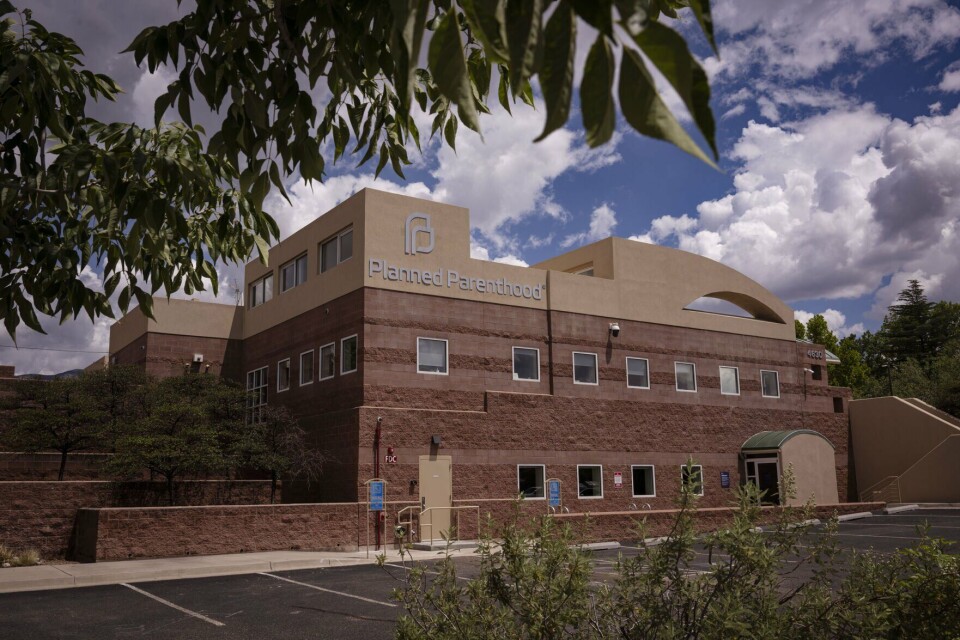
Planned Parenthood received over $792 million in government health services reimbursements and grants, including Medicaid, according to the nonprofit’s 2023 and 2024 annual fiscal report. But those numbers could quickly diminish as the bill proposes to defund any federal money going to Planned Parenthood.
Jack Teter, vice president of government affairs for Planned Parenthood, said the impact on New Mexicans is “enormous.
“Removing the country’s largest family planning provider from the Medicaid system is going to have a terrible effect on patients and providers,” Teter said.
Planned Parenthood provides a variety of medical services, including primary care, birth control access, cervical and breast cancer screenings and more. But one of the biggest services Planned Parenthood provides is abortions.
Over 21,000 abortions were performed in New Mexico, but nearly 70% of them were patients from Texas, according to the Guttmacher Institute. Teter added Medicaid is not applicable for anyone not in the state, meaning those patients used other insurance or paid for the procedure out-of-pocket.
“The impact that this will have on Planned Parenthood is going to be serious,” Teter said. “It’s going to be disastrous. The impact of removing health insurance coverage for millions of patients across the country is going to have a horrible impact on people’s ability to access care. That’s not just at Planned Parenthood, that’s at hospitals all over the country.”
Taxes and the deficit
The bill includes an estimated $4.5 trillion in tax cuts by making permanent Trump’s 2017 tax rates, according to the latest CBO estimate. Among the expanded tax cuts are those Trump campaigned on, including no tax on tips. The bill would increase the standard deduction by $750, or $1,500 for couples, in 2025 and include inflation adjustments. It would also permanently increase the alternative minimum tax to $2,200 in 2026 and require a Social Security number from one parent.
“The President’s legislation will put more than $10,000 a year back in the pockets of typical hardworking families. This is the most pro-growth, pro-worker, pro-family legislation ever crafted,” the White House said in a statement. “Failure to pass this legislation would result in a $4 trillion tax hike.”
The bill would also create “Trump bonds” of $1,000 for every baby born between 2024 and 2028. The money would be invested and help until the child turns 18 and then can be used for specific circumstances like paying for college.
Spaceport
The bill would allow spaceports the ability to issue tax-exempt bonds, similar to airports and seaports. Spaceport America, located near Truth or Consequences, is a state-funded agency and funded by taxpayers.
The bill would increase investment in spaceport infrastructure, lower financing costs for spaceport development and allow for private investments. Tax-exempt bonds have been used to finance public infrastructure projects in the past. Spaceport America declined to provide comment.
Border and immigration
The bill includes a new annual fee for pending asylum cases of at least $100. An earlier proposal to set a $1,000 fee for asylum applicants was rejected by the nonpartisan Senate parliamentarian as ineligible for a reconciliation bill, which requires a simple majority to pass the Senate. The final version nonetheless preserves a number of application and work authorization fees for immigrants, including a $5,000 fee for migrants apprehended between ports of entry.
U.S. Sen. Martin Heinrich, D-N.M., said the fees would increase pressure on border communities and local law enforcement agencies in New Mexico, as financial barriers might push more migrants to attempt to enter the U.S. unlawfully.
The bill appropriates $46.5 billion to U.S. Customs and Border Protection for border wall construction and related infrastructure, including cameras and sensors. Additional funds for local border wall segments are available through a $10 billion fund for states and local governments to help fund border security, law enforcement and relocating immigrants who enter the U.S. without authorization.
It also directs $45 billion to Immigration and Customs Enforcement for expanded detention facilities housing single adults and families, as the administration continues to ramp up removals. New Mexico currently hosts three facilities managed by private operators under contract for ICE, in Milan, Estancia and Chaparral.
ICE will also receive $29.8 billion for hiring and training officers and other staff. The allocation of nearly $75 billion to ICE over five years came amid concerns among lawmakers about the Department of Homeland Security’s spending and budget overruns at ICE as the agency attempts to realize Trump’s promise to execute historic numbers of deportations.
And the bill includes funding to assist with military operations in recently-delegated “national security areas” installed on federal lands along the international boundary, including much of New Mexico’s border with Mexico.
Radiation Exposure Compensation Act
A federal program to compensate people who develop certain diseases after being exposed to radiation through aboveground nuclear weapons tests or uranium mining could get renewed and expanded. An extension of the Radiation Exposure Compensation Act program was included in the bill text, thanks to Sen. Josh Hawley, R-Mo. The program was allowed to expire last year.
The legislation would include New Mexico as a downwind state for the first time and expand eligibility to more uranium mine workers, a long-term goal of New Mexico’s Democratic senators.
Film and television production
The bill would expand the federal tax deduction for certain film, television and theatrical productions to include qualified sound recording productions. The deduction allows up to $150,000 for sound recording costs in the tax year that the expenses were incurred.
Journal staff writers Olivier Uyttebrouck, Cathy Cook, Megan Gleason, Algernon D’Ammassa, Nakayla McClelland, Noah Alcala Bach, Dan Boyd and Elizabeth Secor contributed to this report.


