
Featured
A public life: Former Senator Fred Harris shares his lifelong sense of fulfillment in 'Report from a Last Survivor'

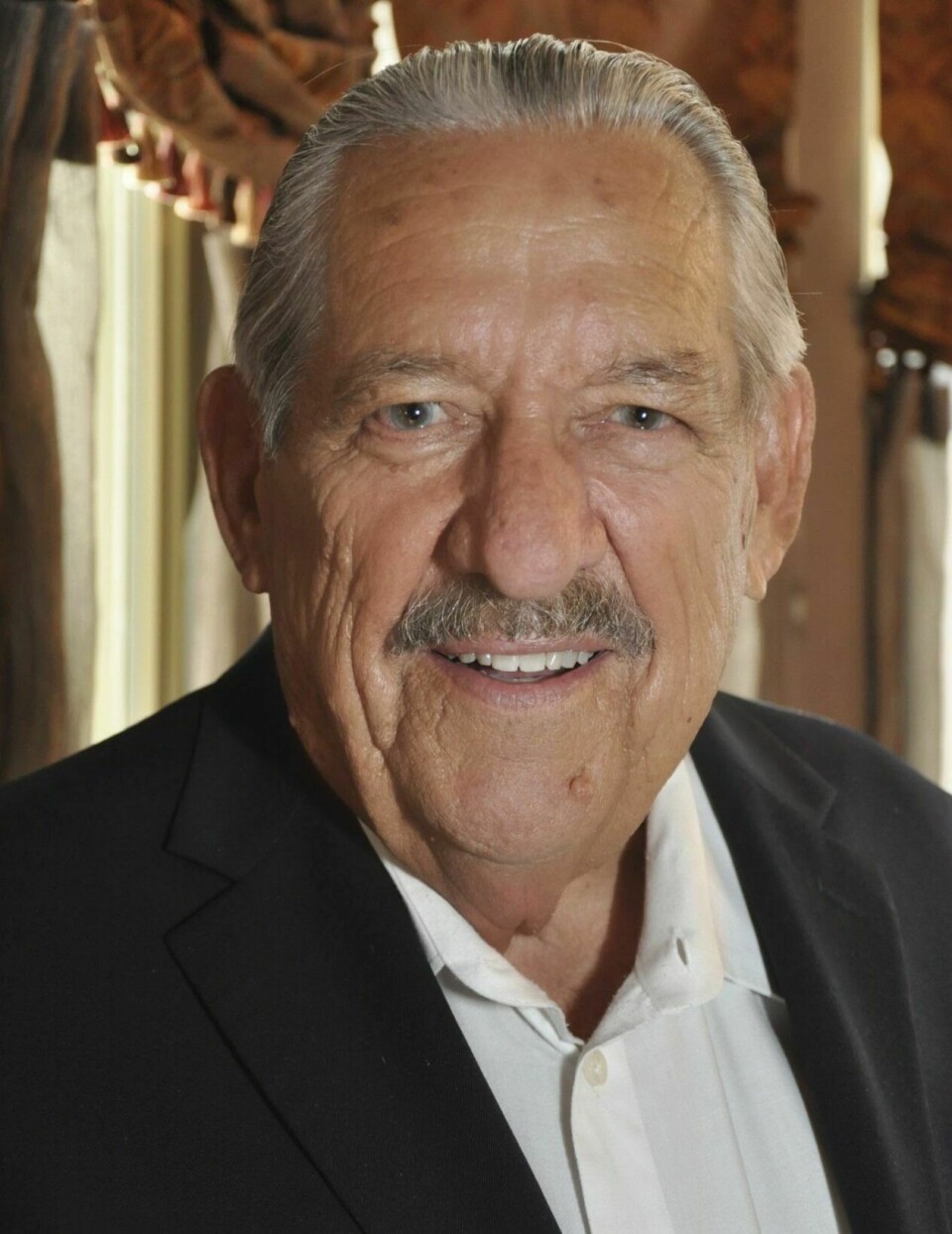
Fred Harris can point to many achievements in his long public life.
In his new book, “Report from a Last Survivor,” Harris writes that he considered three of those achievements he was proudest of. And they were accomplished outside the U.S. Senate, where he served two terms representing Oklahoma.
The first was Harris being named coleader of what came to be called the Kerner Commission. It was created by President Lyndon B. Johnson to investigate the causes — and come up with recommendations — in the wake of the riots, disorders and violent protests that devastated many inner cities in the summer of 1967.
A public life: Former Senator Fred Harris shares his lifelong sense of fulfillment in 'Report from a Last Survivor'
The second was being named, in 1969, the national chair and CEO of the Democratic Party. In that role, Harris appointed a party reform commission that would recommend full representation of women, people of color and young people, as well as his intention to make the Democratic Party democratic in all of the party’s processes for the first time.
At the same time that he served as party chair, Harris was also a U.S. senator. Quite a full plate.
And the third achievement, he writes, was his development of the concept of what he termed “the New Populism,” which called for a fairer distribution of income, wealth and power in the country.
In 1976 Harris sought the Democratic Party’s nomination for president on that populist platform. That year, Jimmy Carter got the party’s nomination and won the presidential election.
It was that second named achievement — the reform of the Democratic Party — that Harris said he considers the heart of his new book.
The party’s direction, he recalled, was split among four of its top leaders — President Johnson, Vice President Hubert H. Humphrey and U.S. senators Robert F. Kennedy and Eugene McCarthy.
“That (splintering) was why I agreed (to serve as party chair). It was really in a mess,” Harris said in a phone interview from his home in Corrales. “It turned out I was the only one to bring them together.”
And there was another deeply divisive issue in the party and the country in 1969 — the Vietnam War.
Harris said it fell to him to put the party on record as being officially against the war.
A chapter in the book that holds special interest for New Mexico readers is about the prolonged fight over Blue Lake in northern New Mexico.
Harris writes about the political battle in rich detail.
Taos Pueblo has long held sacred the lake and its equally sacred 48,000 acres of catchment watershed. Blue Lake and the lands held important religious and cultural importance.
However, President Theodore Roosevelt had by executive order in 1906 made the lake and the watershed part of the Carson National Forest.
Fast-forward to 1951. Harris writes that Taos Pueblo filed a land claim with the then-new U.S. Indian Claims Commission. The commission ruled, 14 years later, that Blue Lake had indeed been taken illegally by the federal government and that Taos Pueblo’s claim was valid and should be compensated with money.
The pueblo didn’t want money. It wanted ownership of the lake and the watershed. But the commission wasn’t empowered to provide land compensation.
So the pueblo renewed its lobbying of the White House and Congress, focusing on powerful New Mexico Sen. Clinton Anderson, who long opposed the land return.
Harris was in the U.S. Senate when he began his deep commitment in support of the pueblo in its eventual successful fight for the return of the lake and the lands.
The early part of Harris’ book is a memoir written in a friendly, boy-howdy flavor. Harris recalls growing up on a farm outside the southwest Oklahoma town of Walters.
He earned money as a hay-baler as a child, working in the extended family’s business. He saved money to buy a BB gun, devoured books, and later took jobs as a printer to help pay for his college education, including law school. Harris was — and still is — a go-getter.
The last two chapters introduce readers to the author finally meeting Harper’s Magazine editor Willie Morris, and developing a long-term friendship with journalist and fellow small-town Oklahoman Bill Moyers.
In another chapter, Harris devotes 22 pages to his excerpted, “unrehearsed and somewhat rambling” remembrances that were originally recorded for the Robert F. Kennedy Oral History Collection. He and Kennedy became close friends when both served in the U.S. Senate.
What some people may not know about Harris is that he’s the author of 21 nonfiction books and three works of fiction. He credited Tony Hillerman, another fellow Oklahoman, for sage advice in writing and selling his first novel, “Coyote Revenge.”
In “Report from a Last Survivor,” Harris shares with readers his lifelong sense of fulfillment.
In his 93 years, he writes, he’s been lucky enough to “live out all my fantasies, to have got almost everywhere I’ve wanted to go, and, most of all, to meet nearly everyone I most wanted to meet — and to have made good friends of a lot of them.”


