
Featured
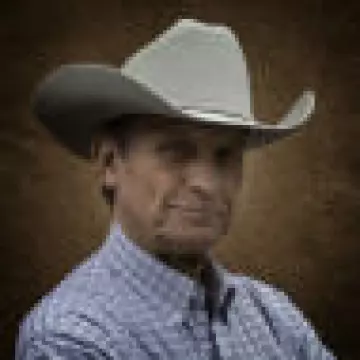
A wild ride: Allan Chapman's musical journey took him from Woodstock to Nashville and back to his cowboy roots


Published
Modified


If anyone ever came into this life destined to be a cowboy, it was Allan Chapman.
He was born in Pecos, Texas, and grew up in tiny Benjamin, Texas, near the Blue Goose Ranch, founded by his great-grandfather in 1882.
“When I was in junior high and into high school, while the other kids were going on dates on weekends, I’m on the ranch, digging post holes, stretching barbed wire and breaking horses. All that kind of stuff,” Chapman said during a phone interview from his present home in Wise County, Texas, north of Fort Worth.
A wild ride: Allan Chapman's musical journey took him from Woodstock to Nashville and back to his cowboy roots

Who knew back in the ’60s when he was the Blue Goose kid, that Chapman would teach at a university, attend Woodstock, be a Grammy-nominated Nashville songwriter and an award-winning Western musician.
He had a long run as a bass player and lead male vocalist with The Texas Trailhands, a group that was named International Western Music Association Western Swing Group of the year in 2004, 2005 and 2007, and won IWMA Western Swing Album of the Year in 2000, 2002 and 2005.
In 2017, he and Rio Rancho singer-songwriter Jim Jones won the 2017 Western Writers of America Spur Award for the song “Halfway Down the Devil’s Road.”
And this year, “Last of the Four Sixes Cowboys,” a song Chapman wrote with fellow Texan Joel White, is nominated for IWMA Song of the Year, and Chapman is nominated for IWMA songwriter of the year.
Chapman and his accomplished fiddle-playing wife Rodeo Kate will be among those attending the IWMA Convention Wednesday, Nov. 13, through Sunday, Nov. 17, at Hotel Albuquerque, 800 Rio Grande Blvd. NW.
A good feeling
The IWMA was founded as the Western Music Association in 1988 and added “International” to its title in 2018. The organization’s annual convention has been in Albuquerque since 2004.
Chapman has been a member of IWMA for more than 30 years and is enthusiastic about its future.
“In my years in IWMA, I’ve seen a lot of groups come and go,” he said. “But we have a lot more youth members now than we ever have had, so I have a real good feeling.”
For those paying attention, there were signs in Chapman’s tender years of his future as a singer-songwriter.
According to a family story, when he was nine months old, he pulled himself up alongside the large Philco radio in his home’s living room so he could tap his foot and sing along with the music. By the time he was 8, he was a budding poet.
“In second grade, I won a national children’s poetry contest for a poem about the friendship that developed between a dog and a tree,” he said.
There you are — the roots of the songwriter who would pen the Grammy nominees “Didn’t She Really Thrill Them (Back in 1924),” recorded by the Oak Ridge Boys; “Home-Made Love,” Kenny Rogers; and “Love Lies,” Diana Ross.
Chapman is evidence that some folks won’t stay on the ranch after reading Byron, Keats and Shelley. He attended Texas Christian University, earning bachelor’s degrees in philosophy and English literature and a master’s in English literature. From 1971 until the start of ’73, he taught freshman composition, 18th-century English literature and 20th-century American literature at Oklahoma State University.
But before that, he went to Woodstock.
Hotel for hippies
“I had just graduated (from college) and gone up to spend the summer (of 1969) in New Jersey and New York and work with song publishers in New York,” Chapman said. “Two of my friends were also songwriters, so we hopped in a VW minibus and went up to Woodstock. It was not my favorite camping exposition. There were no bathrooms, very little sanitary consideration.”
And it was rainy and muddy.
“But we stayed the entire time,” he said. “We were within spitting distance of the main stage. We got to see Janis Joplin, all the West Coast acts, Jefferson Airplane. I heard Jimi Hendrix play ‘The Star-Spangled Banner.’ I thought it was just someone practicing.”
Chapman played music in the Tulsa bar scene while in Oklahoma and after leaving Oklahoma State, he put all his stuff in his orange Ford Pinto and drove to Nashville in 1973. He stayed in a big house owned by one of his Tulsa music friends.
“It was like this big hotel for hippies,” he said. “John Hiatt stayed there for a while. Dan Fogelberg stayed there for a while.”
Chapman got work writing songs for Tree Publishing and United Artist Music Publishing, and hung out with the likes of Guy Clark, Townes Van Zandt and Steve Earle.
“We were just a bunch of Texas boys sitting around singing ‘Stay All Night, Stay a Little Longer,’” Chapman said. “They were just splendid songwriters.”
Chapman was in Nashville from ’73 to 1989 and wrote about those heady times in a song he titled “1973.” But then he went home to the ranch of his young years.
“The music industry had changed in Nashville over the years,” he said. “How you got paid on records and singles had changed. I was getting older. And my dad needed help on the ranch. I didn’t pick up a guitar for a year.
“And then a friend of mine wanted to go down to Fort Worth and see this singer named Don Edwards at the White Elephant (Saloon). He was singing all these cowboy songs I had known since I was a kid.”
And Chapman was hooked.
Finding Bob Wills
Melding his cowboy roots with his passion and talent for music, Chapman started performing in the 1990s with Western groups such as The Sons of the Buckaroos, aka The SOBs, the Chisholm Trail Cowboys and The Texas Trailhands. The latter group hit a gallop and broke into a lather.
“On weekends, we traveled from Charlotte, North Carolina, to Los Angeles and anywhere in between,” Chapman said. “We went to Germany, Mexico and Japan. It’s the closest I’ll ever get to being in a rock band.”
Chapman met Rodeo Kate on the Western music circuit. She joined The Texas Trailhands in 2000, and they were married that year.
Karen “Rodeo Kate” Howell-Chapman grew up in northern Utah.
“We were in the suburbs,” said Howell-Chapman, 65. “My aunt and uncle had a small ranching outfit. My uncle raised thoroughbreds, and they sure were fun to run. I really enjoyed letting them run. I like going fast.”
She did try her hand at high school rodeo — goat-tying and bareback riding.
“I got the goat tied, but never fast enough to win,” she said. “I stayed at bareback for two years. I guess I was too dumb to know I was not supposed to fall off.”
She figured out she had a better chance of hanging on to musical instruments. She played viola, cello and fiddle.
“I did old-timey fiddle and would sing a little bit,” she said. “When I was in fifth grade, I would play with the Utah Old Time Fiddlers at Lagoon, an amusement park like Six Flags between Ogden and Salt Lake City. That was fun because we would get passes.”
She got a violin performance degree from the University of Wisconsin-Madison.
“Western music was not a big deal where I grew up,” Howell-Chapman said. “I had not heard of (Western swing pioneer) Bob Wills until I got down here in Texas. But I did a solo fiddle act at a coffee house in Madison, and KG and the Ranger came to see me.”
KG (Karen Gogolick) and the Ranger (Rick Roltgen) are a husband-and-wife Western music act based in Madison. Rodeo Kate played with them for several years before leaving that city. She later played with the Daughters of the Purple Sage before joining The Texas Trailhands.
In 2005, she was named IWMA Instrumentalist of the Year, the first woman to achieve that recognition.
These days, Chapman and Howell-Chapman perform as a duo they call the Dinosaur Cowboy Band, and Howell-Chapman raises dairy goats for show and sale and is a school librarian at Patrick Elementary School in the Arlington (Texas) Independent School District. The library job gives her a fresh venue.
“In the morning, I get my fiddle out and just stand in front of the school and play,” she said.
Feeling the energy
Chapman and Howell-Chapman will perform during the IWMA Convention’s Friday Night Opry show, and Chapman is part of a panel discussing “The Roots of Western Music.”
“I feel this energy flowing toward Western music from country music right now,” he said. “There are a lot of artists not inside the purview of IWMA writing songs about life in the West — in a good way. You don’t have to be a cowboy to appreciate that life.”


