
Cavalera frontman Max Cavalera discusses Indigenous spirituality, politics and his friendship with Ozzy ahead of ABQ show


Published
Modified
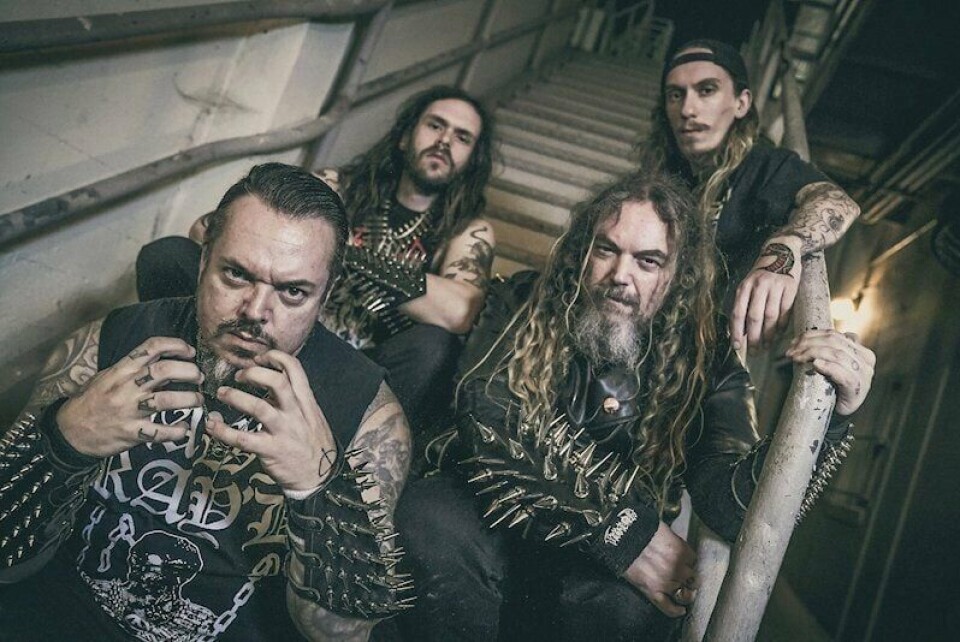
Cavalera frontman Max Cavalera believes metalheads are misunderstood.
“We feel that, being metalheads, we’re the outcasts of society. We’re looked at with a snarl of disgust,” he said. “But I think that inside of metal, there’s a lot more union and friendship, and less hatred, less prejudice and less racism. We’re more open-minded. You can be any kind of person, as long as you love metal and you are there for the same reason — to sing the songs with the band that you love — that’s what it’s all about.”
Metal fans can sing along with the band, also known as Cavalera Conspiracy, at Sunshine Theater on Sunday, Oct. 12. For their “Chaos A.D. Tour,” the band is performing every song from the 1993 album “Chaos A.D.,” which Max Cavalera and his brother Igor recorded under the aegis of their first band, Sepultura.
Max Cavalera said he’s been surprised by just how strong the reception has been.
“It’s a real trip how much people love this record. I knew they were going to love it, but it surprised even me how they know every word and they sing with, like, full screaming,” he said. “It’s powerful.”
He called “Chaos A.D.” “a perfect album to play live.”
“People love it. It’s heavy. It’s got all the beat-downs,” he said. “We’re playing the whole thing, and it’s great, every single song.”
“Chaos A.D.” was also a resolutely political album.
“This record has aged so well. It’s relevant to the topics of today,” Max Cavalera said. “I mean, we have songs like ‘Refuse/Resist,’ and even stuff like ‘Manifest,’ again, that was a song written about a Brazilian jail riot.”
When the Cavalera brothers formed Sepultura in 1984 in Belo Horizonte, Brazil, their country was still being ruled by a military dictatorship, and the impulse to resist authoritarianism became a driving force in their music.
Antiauthoritarian songs still resonate today, Max Cavalera said, “with the police corruption and abuse of power that’s going on everywhere, and with all these ICE raids and the wars going on in the Middle East and Ukraine.”
When he was growing up, heavy metal music in Brazil was still very niche.
“Samba was always big, and, of course, tropicalia and Os Mutantes and all of that, but underneath all that, the underground was starting to happen,” he said. “We were listening to a lot of European and American stuff — AC/DC and (Iron) Maiden and (Black) Sabbath and (Judas) Priest. And it (the metal scene) became bigger and bigger as it went along. And the next thing you know, Brazil is a really full-loving metal country. It was crazy.”
Sepultura became one of the biggest names in metal, selling over 20 million albums worldwide, according to BMG records.
Following a public feud with his brother in 1997, Max Cavalera left Sepultura and started a new project, Soulfly, where he explored the music and spirituality of his Indigenous ancestors, including his great-grandmother whose community came from the Amazon rainforest.
“The original idea of what Soulfly is — the tribal rhythms and the imagery and some of the words, some of the topics — are related to spiritual beliefs,” he said.
Soulfly are still together and planning to release a new studio album later this month, titled “Chama,” meaning “flame” in Portuguese. Meanwhile, Max and Igor Cavalera reunited in 2006 and have been playing together ever since as Cavalera Conspiracy or simply Cavalera.
Max Cavalera said “Chaos A.D.” marked his first foray into the Indigenous themes that he would later explore in Soulfly. The song “Kaiowás” from that album called attention to the plight of the Guarani-Kaiowá people, whom the Brazilian government began violently evicting from their traditional homes in the rainforest beginning in the 1980s, actions that the international activist organization Avaaz and some genocide scholars have labeled a genocide.
“‘Kaiowás’ was actually the first introduction, I believe, to mixing metal and full-on tribal music,” Cavalera said.
In the years since the song’s release, conflict between the Brazilian government and the Guarani-Kaiowá people only increased. In 2012, a group of 170 Kaiowás issued a collective statement saying they would rather stay on their land and be killed than leave.
“The Kaiowás is a tribe that (was willing to) commit suicide because the government was taking away their land,” Cavalera said. “It’s a real sad thing, but it’s also a real powerful protest.”
Although “Kaiowás” is an instrumental acoustic song, Max Cavalera said it has been the most powerful song from “Chaos A.D.” to perform live.
“It’s acoustic, and we do it in the original version. But it’s the heaviest song of the set,” he said.
Over the years, Max Cavalera has met and worked with many of his heroes. He recalled being starstruck when he first met Ozzy Osbourne, but the two later became close, touring many times together.
“Sharon (Osbourne) was friends with my wife, Gloria, and they really love each other,” he said. “And Ozzy also loved all of us like family.
“They say, ‘Don’t meet your heroes,’ but that’s bull****,” he continued. “Do meet them, and become friends with them. It’s even cooler that way.”
He said Osbourne’s death in July was “a real sad day,” but he will always remember the Black Sabbath frontman’s humor and kindness.
Cavalera is looking forward to playing in Albuquerque.
“I always love the New Mexico shows, because we have so many different tribes in the crowd, like Navajo and Apache, and it’s really cool,” he said. “They connect through the music really well, and it gives the show a special feeling… I don’t know, it’s just a connection between the love I have for my Brazilian Indigenous heritage and the lifestyle of the Southwest, which I love, as well.”


