
From winter-deep pools, Rio Grande cutthroat trout call



Neil Young’s “Decade” album was among my first pieces of music on vinyl.
Not until well into middle age did I come to understand the song “Helpless.”
Neil Young is his own genre — an acquired taste like Dylan, organ meat or Pabst Blue Ribbon. Neil goes on in a melancholic tone about a place in north Ontario “where dreams comfort memories to spare.” He’s owned by an instinct that leaves him helpless to the nostalgic pull of home.
“In my mind, I still need a place to go,” he confesses.
That same marrow-deep sentiment afflicts me. I am drawn to the small creeks of the upper Rio Grande basin. In particular, I have for decades been infatuated with the Rio Grande cutthroat trout that persist in the tiny headwater streams of the Carson National Forest and the Pecos Wilderness.
It is my home waters and those of my children as well. From any room in my Edgewood house, I can see the full southern expanse of the purplish Sangre de Cristo Mountains. It’s a dark flotilla moving nowhere, bathed in brooding crimson and pink against turquoise in the late afternoon sky, that enlivens the senses.
Penitente and Truchas peaks poke into the sky, capturing snows that cap the high country going into early next summer. When Planet Earth makes its vernal tilt wobbling around the sun, that snow will melt and trickle into granite crevices then fill soggy cienegas, wending further downhill by the unfailing pull of gravity spilling into little silver rills with proper names on maps. They are blue capillaries that beget bigger waters.
Winter’s snow melt will be the oxygenated, gelid water that tumbles into potbellied pools like a vessel of churning mercury. Fresh melt water will pour over the scaled flanks and pass through the gills of our rare native cutthroat trout as they tarry in eddies guarded by alder roots or downed pines lying across the creek. The trout wait there for larval insects to drift downstream or hapless moths or mayflies to land on glassy glides. That’s where we hope to encounter cutthroat trout in the warmer months of the year, laying a dry fly with a bow cast over a cobbled pool at 9,500 feet elevation. The experience flosses your mind.
The Rio Grande cutthroat trout was the first trucha documented in the New World in 1541. A chronicler on the Coronado Entrada noted trout swimming near Pecos Pueblo.
Another 300 years would pass before the fish was officially described for science by Charles Girard, a French medical doctor and naturalist who was invited to work at the Smithsonian in the 1850s. Girard cataloged organisms that had been collected in the western United States, including the Rio Grande cutthroat. Girard joined the Confederacy as a medical officer, then went home after the Civil War. The trout he named are still here, though not as abundant as they were in Girard’s time.
If one is willing to wear off some boot tread and head to the high country, you can see them for yourself. Trout don’t grow big in small waters. But they are a sight to behold — a living, swimming artifact of geology and deep time.
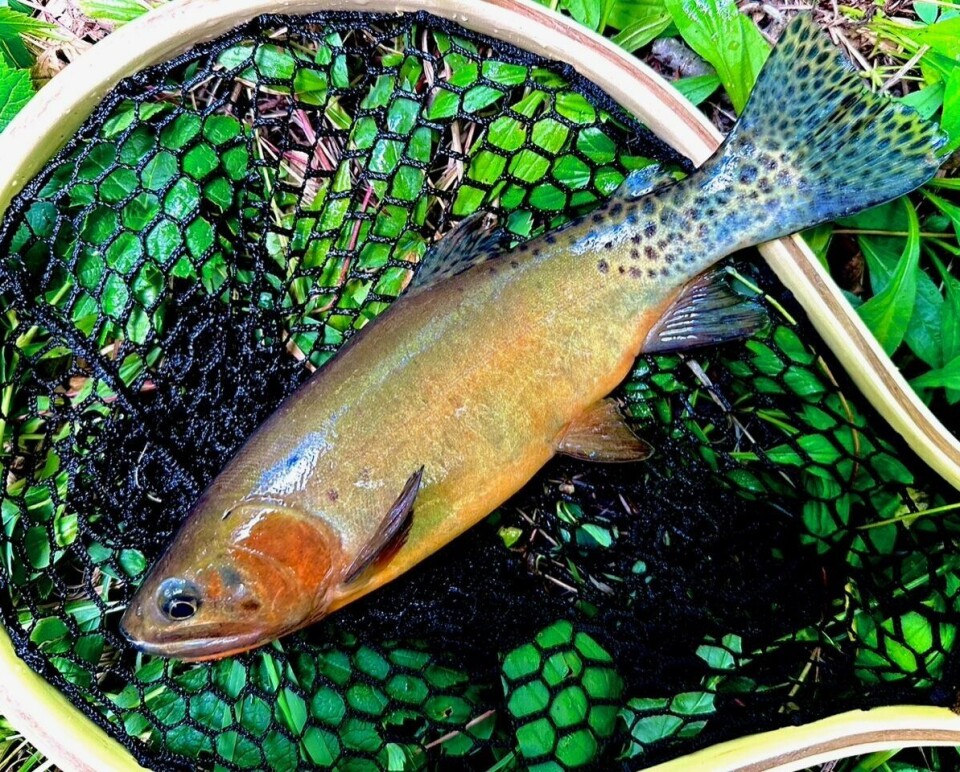
Beneath their chrome veneered flanks, they are colored like the mixed-conifer forest where they live: creamy-yellow like alders in autumn, olive-green like Douglas fir needles, chin, cheek and belly smudged in carmine like the ripe scratchy rose hips. Black peppercorns adorn the tail.
Summer has long exhaled its last. Winter comes on like dusk, closing out the day. The Rio Grande cutthroat trout will retreat to the deepest pools in a seasonal torpor waiting there for me and my children. The temporal is the eternal. I am helpless against the pull to the high country and the little trout that swim there.
Follow Craig Springer on Instagram at CraigSpringerOutdoors.
From winter-deep pools, Rio Grande cutthroat trout call


