
The threads that bind: Wheelwright looks at the fashion and family of a Native American art dynasty





Published
Modified
When legendary artist Pablita Velarde attended prestigious events, she dressed for the part.
Velarde’s clothing, along with that of her daughter Helen Hardin and granddaughter Margarete Bagshaw, are on display at Santa Fe’s Wheelwright Museum of the American Indian through April 12, 2025.
Each painter was independently known as one of the finest of her generation, and their conscious and graceful crafting of style secured their iconic status.
The threads that bind: Wheelwright looks at the fashion and family of a Native American art dynasty
These items were also shared. Clothing and jewelry were witness to their complex, evolving relationships and intimacy as a family.
Pablita Velarde (Tse Tsan, Golden Dawn, 1918-2006) was well known to Native art collectors for several decades. She was born at Santa Clara Pueblo and was active until her death in 2006. She was the first full-time female student in Dorothy Dunn’s art class at the Santa Fe Indian School. She painted in the “traditional” style and did accurate portraits of Native American life and culture.
Velarde launched an artistic dynasty through her daughter Helen Hardin (Tsa-sah-wee-eh, Little Standing Spruce, 1943-1984) and granddaughter Margarete Bagshaw (1964-2015).
With a nod to fashion wrapped in Native American style, the women’s clothing features entire outfits of skirts, blouses, dresses, jewelry and shoes.
The show germinated from a similar exhibition of Velarde’s jewelry, said curator Henrietta Lidchi.
“One of her outfits had stayed in the Case Trading Post,” she explained.
Lidchi learned Velarde’s great-granddaughter Helen Tindel had boxes of the women’s clothing and jewelry. The curator suggested an exhibition.
“All three of them had to negotiate the art world, and part of that negotiation was how they presented,” she said. “They were on display, but they were also extremely self-determined. Pablita was effectively (Tindel’s) grandmother because Helen Hardin died before she was born.”
Velarde often bought clothes in Albuquerque at Margarete Chase’s dress shop. Margarete Bagshaw was named for her, Lidchi said.
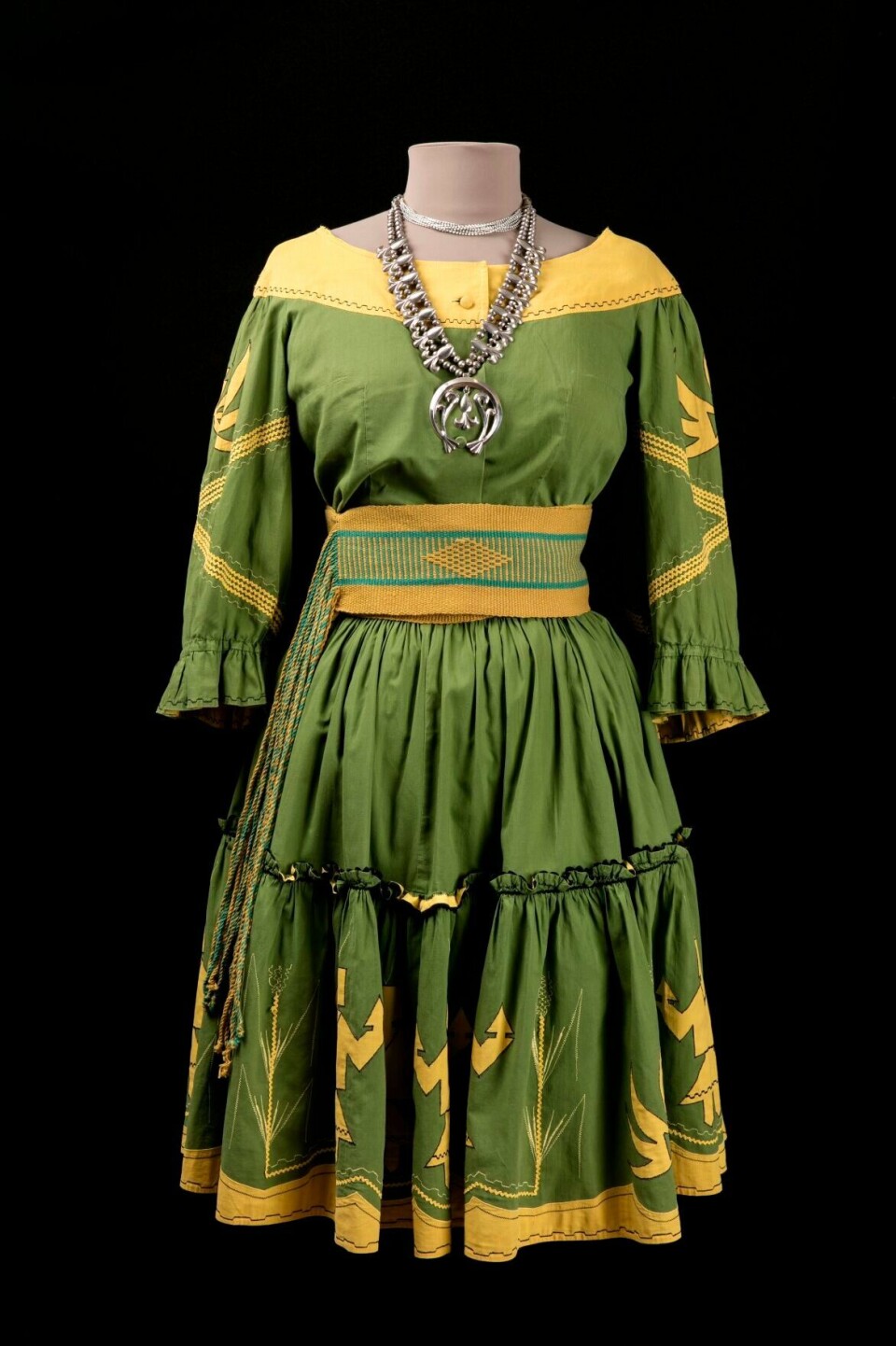
Velarde’s green and yellow ensemble featured appliqued corn and figural symbols around the hem. She wore it with her silver squash blossom necklace to openings and markets.
She also wore her white cotton dress with a blue woolen manta in the 1950s.
“That was one of the outfits she wore for tribal occasions,” Lidchi said. “There are a number of photographs of her wearing that belt.”
Helen Hardin wore the off-the-shoulder green dress with embroidered trim when she moved to Colombia with her father in 1971. Her first solo show was in Guatemala.
Hardin also wore a cotton polka-dot dress with turquoise and red and white rickrack.
“It looks like a fiesta style dress,” Lidchi said.
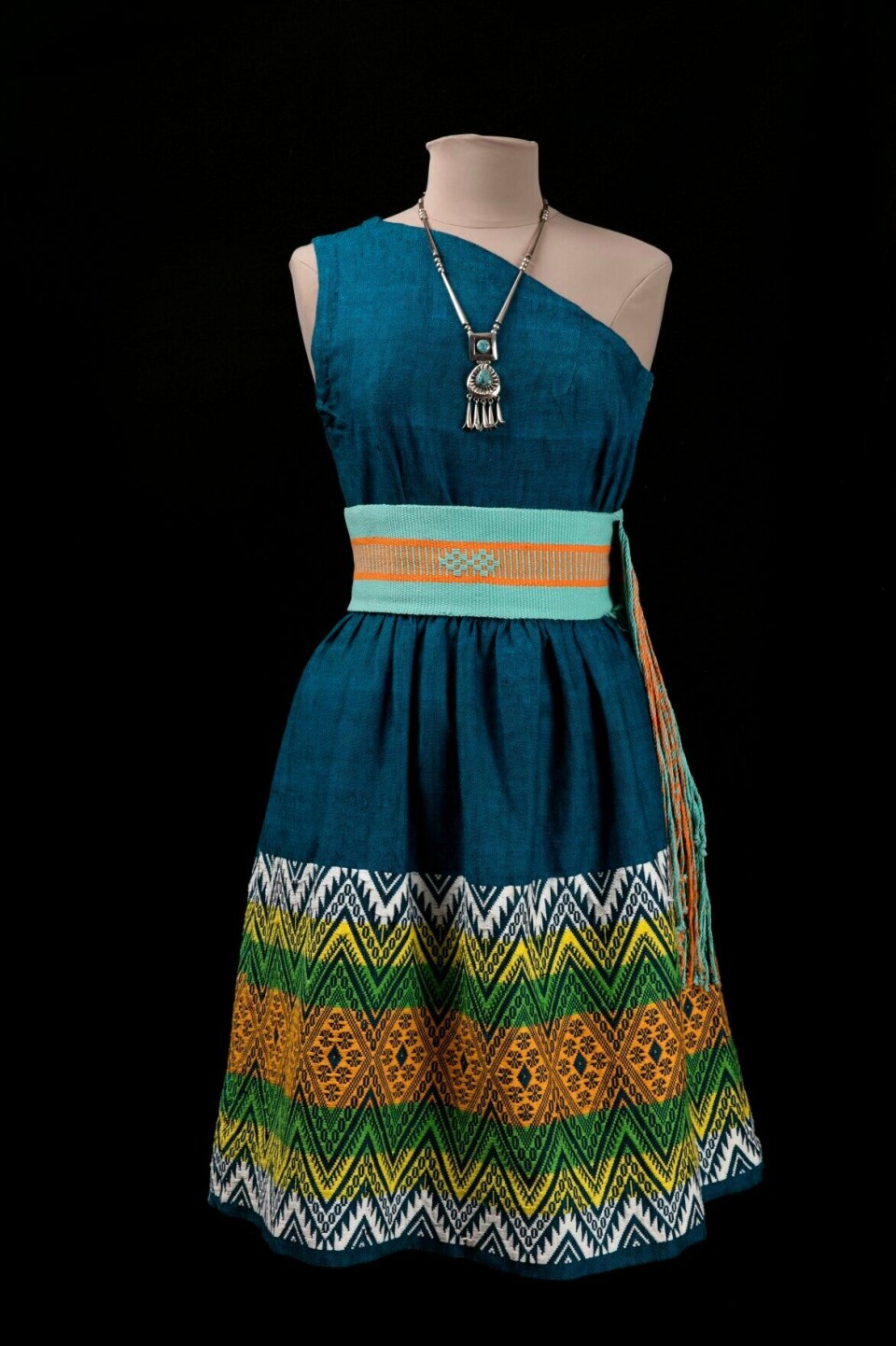
The stylish Bagshaw wore a one-shoulder custom-made dress with red ribbon trim by Josie Marquez.
“It’s clothing that’s like regalia more than clothing to do gardening,” Lidchi added. “They were Native American artists trying to forge their way in a world that was very different from them. It was a complex proposition for an independent woman to manage. It has sort of an emotional pull.”
A case encloses sketches, gifts and photographs from the three artists.
“The clothing is more similar than you might imagine,” Lidchi said. “It pulls together all the women when they were young.”


