
Two girls on opposite sides of the Israeli-Palestinian conflict forge an unlikely friendship in 'The Wire-Walker'
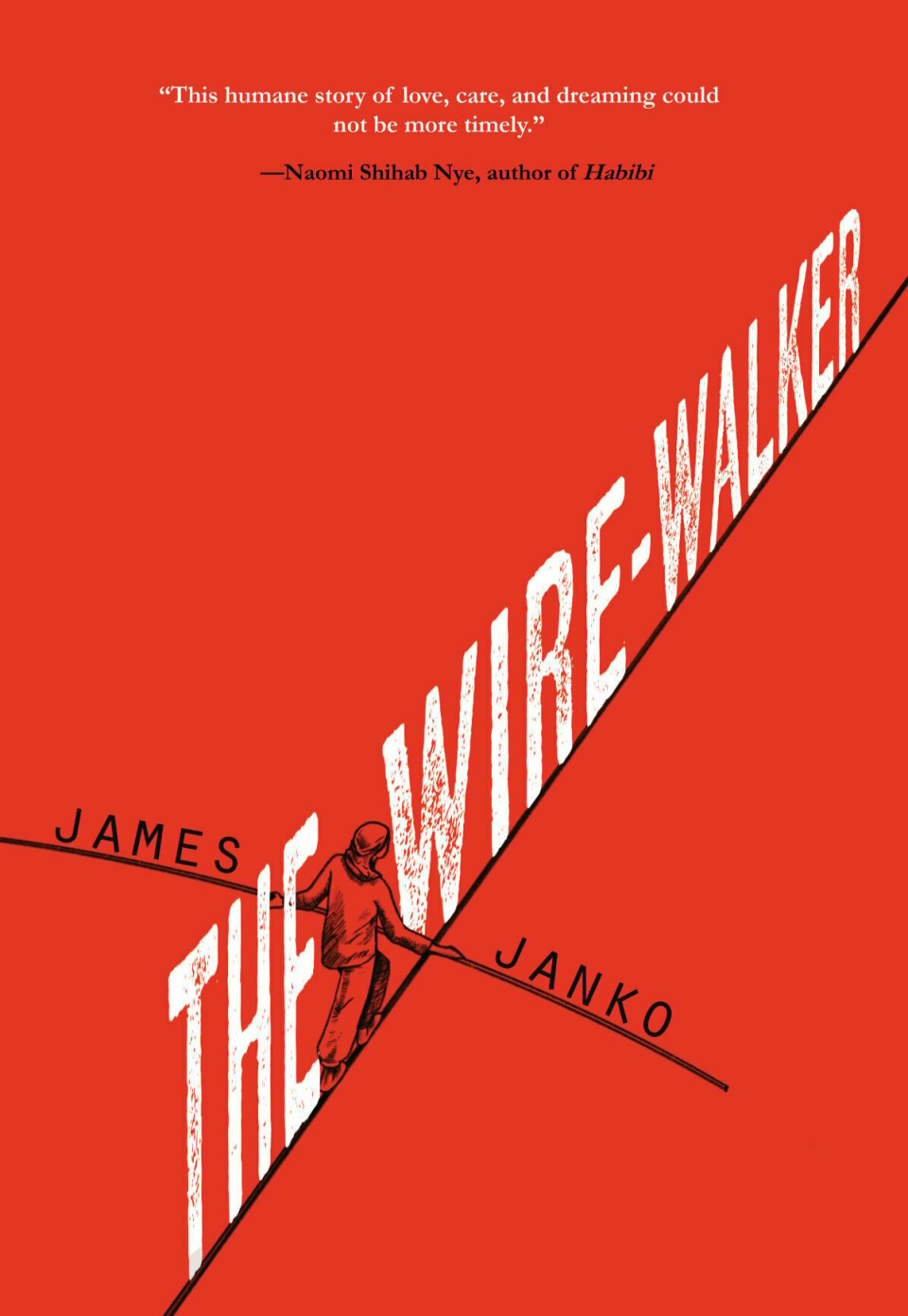

James Janko’s emphatic new novel “The Wire-Walker” gives the reader a view of the people behind the headlines of the seemingly constant fighting in the Middle East.
The novel addresses issues of friendship, loss, defiance and desire, offering a glimpse of relations between Israelis and Palestinians.
The issues are wrapped around Amal, a Palestinian girl who’s the central figure in the book. She’s a symbol of hope and nonviolent resistance.
Amal is 16 going on 17. She’s the wire-walker of the book’s title and she’s in daily pursuit of being a professional circus aerialist. It’s her reason for living. Every day Amal learns more about how to, as she calls it, “walk in the sky.”
For her, home is a very small apartment she shares with her twin brother Issam, their mother Layla, and their grandfather Saeed. They live in the Balata Refugee Camp near Nablus on Israel’s occupied West Bank.
Thirty thousand Palestinians live in the camp, which is one square kilometer. “A sardine experiment, too many fish in one can” is how Grandfather Saeed thinks of the camp.
Amal mostly practices on a wire or a rope above the narrow alleyway outside a window of her family’s ground-floor apartment.
Sometimes she and her best friend Maysa, a juggler who wants to be a circus contortionist, practice in a ruined building on the edge of the camp.
When they can, Amal and Maysa go to the circus school in the nearby city of Nablus.
Among Amal’s family members, her grandfather is the most supportive of Amal’s love for circus. He wants to help her organize a children’s circus performance in the camp.
Amal writes a blog about her wire-walking using her grandfather’s cellphone. She’s surprised that an Israeli girl from Tel Aviv, Tali Glazman, a juggler, is the only reader of Amal’s blog. She, too, is 16.
Tali performs with The Flying Kids of Tel Aviv, a professional circus troupe comprised of Israeli and Palestinian youngsters. Sometimes Amal and Tali talk on a messaging app.
They gradually build a friendship. They share a sadness: Their fathers are dead.
The girls try to limit their conversations on the messaging app about circus life. Otherwise, if they talk about such topics as politics, they begin to argue. Since they live in different worlds, they decide it’s OK to argue.
When Tali says she’s lucky to be alive, Amal thinks Tali’s referring to the Holocaust, which occurred years before Tali was born.
Thinking of the present-day, Amal tells Tali about the Israeli drones and fighter jets that zoom over Balata and Nablus or the soldiers tossing stun grenades, terrifying residents.
Amal is making a film, “One Alley in Balata,” which has some footage devoted to circus performances. Tali has viewed it twice; through the film she gets know Amal’s extended family.
Amal admits to herself that she’s lying when she tells Tali the men of the Balata camp only have stones, In fact, her own brother knows about rockets and explosives. Given its weaponry, she wonders why Balata doesn’t have more martyrs.
Then, a dream come true for Amal. At Tali’s urging, Amal applies for — and receives — Israeli permission to give a public performance with the Flying Kids in Tel Aviv.
During her visit, Amal stays with Tali and her mom. Her visit strengthens the girls’ friendship and deepens the feelings Amal and Tali’s mom have for each other.
Amal develops a crush on Mazin, a Palestinian trapeze artist in the troupe.
Her visit also gives Amal the chance to meet Israelis who oppose the government’s harsh rule over the occupied West Bank.
Amal’s love for the art of aerialism and her defiance of Israel come to a head when she rides on the barrel of a tank down a darkened street.
It’s intentional. She wants to disrupt what she understands is a planned attack by her brother and his cohorts on Israeli soldiers.
Amal pleads innocence. Still, her walk on the tank barrel lands her in caged detention for 11 days.
Her twin brother Issam is an angry young man, unafraid to die. He’s angry at the Israelis for stealing their land, their water. He’s so angry that he wants to kill them.
Amal discovers a suicide vest under the bed Issam shares with Grandfather Saeed. The discovery leads to Amal hiding it in a cave, confessing to Issam its location, and after interrogations, takes soldiers to find it and dispose of it. Does this make her a traitor to the Palestinian cause?
The chapters about the vest are some of the most harrowing sections of the book.
An article that Janko, an Albuquerque resident, read in a rural Illinois newspaper was the spark that eventually ignited his writing the book. The article was about a circus in Israel’s Galilee region, comprised of Israeli and Palestinian children.
“Then I started reading about Palestine and Israel out of my own curiosity,” Janko said in a phone interview.
After almost nine months of solid reading, he said, he came to the realization that there was a novel in him crying out to be written. He visited Israel and the West Bank as part of his research.
As for the character of Amal, Janko said, she has so much discipline, talent and faith in herself. Amal is based on a young girl, a gymnast, he saw at the Nablus circus school.
“Her way of moving, her exuberance. She was shining when she performed … I thought about this girl a lot,” he said.
Two girls on opposite sides of the Israeli-Palestinian conflict forge an unlikely friendship in 'The Wire-Walker'


