
How much rain does New Mexico get in a year?
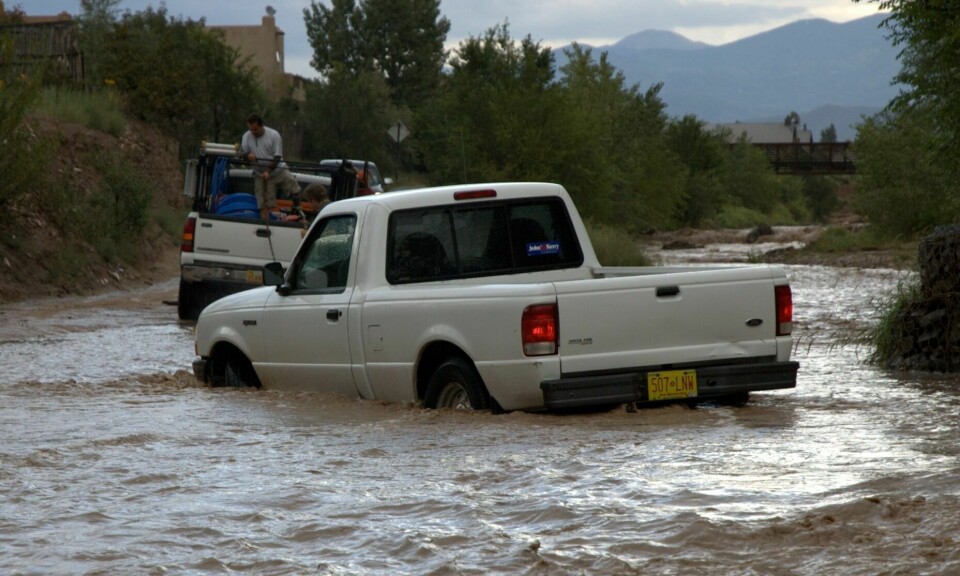
HEAVY RAIN CAUSES FLOODING A truck driven by Stephan Yadzinski(cq) gets a tow from Mark Bueno(cq) Wednesday after getting stuck in the Santa Fe River at Camino Carlos Rael when Yadzinski tried to cross the river after a thunderstorm.

Published
Modified
New Mexico's weather patterns are anything but predictable.
The diverse terrain of New Mexico creates weather that can change quickly over relatively short distances, but how much precipitation does the state actually get every year?
This post will walk you through the history and trends of rainfall in New Mexico.
Historical rainfall patterns
New Mexico's climate is characterized by its stark contrasts, with both desert and mountainous regions. Due to these geographical variations, rainfall patterns differ across the state.
Historically, New Mexico receives an average of 13 inches of precipitation annually. Average annual precipitation ranges from less than 10 inches over much of the southern desert and the Rio Grande and San Juan Valleys to more than 20 inches at higher elevations in the state. The Albuquerque area on average sees about 9 inches of rain annually.
Rainy seasons
While New Mexico's arid reputation holds true for much of the year, there are specific seasons when the state experiences more rainfall. Here are our two primary rainy seasons in New Mexico:
• Summer Monsoons
One of the most significant sources of moisture for New Mexico is the North American Monsoon System (NAMS). This seasonal weather pattern typically occurs from June through September. While these summer monsoons are vital for replenishing water sources and supporting the region's ecosystems, thunderstorm frequency increases and exceptionally hot days become more common.
• Winter Storms
In the northern mountainous (and surrounding) regions of New Mexico, winter storms bring a significant amount of moisture in the form of snowfall. The winter months, from December to February, see an increase in precipitation. The snowpack from these storms is crucial for supplying water to rivers and reservoirs, which in turn supports agriculture and communities downstream.
When it rains in the desert, beauty, fury fill the New Mexico sky, ground


Current rainfall trends
In recent decades, New Mexico has faced severe droughts, which have had far-reaching impacts on water resources, agriculture, and ecosystems.
New Mexico's annual rainfall may not match that of other states, but its diverse climate and geography create distinct rainfall patterns.
The summer monsoons and winter storms are some of the primary sources of moisture.


