
Featured
Audit of inmate health care at Bernalillo County jail found a ‘lot of work’ to be done


Published
Modified
A November audit of the Bernalillo County jail’s medical care found improvements but also identified roadblocks in providing “timely and adequate health care” to inmates.
The report, collected as part of the Metropolitan Detention Center’s jail-reform settlement agreement, was gathered during a Nov. 13-15 visit. It was the first done since MDC’s newest health care provider, University of New Mexico Hospital, took over in July, replacing back-to-back for-profit providers.
Dr. Muthusamy Anandkumar, who has conducted the audits over the past few years, found that UNMH has made “significant improvements” to the medical program — filling crucial roles, updating equipment and recordkeeping, according to the report.
The report stated, with urgency, that “a lot of work still needs to be done to ensure timely and adequate health care to all inmates.”
“Currently, the inmates are not receiving the standard of care they require in a timely and dependable manner,” according to the report. “However, the new medical team has taken charge and is putting forth significant efforts to improve the situation.”
Anandkumar found MDC was out of compliance in many of the same areas identified in the last report, including delayed health assessments and an unreliable system for sick calls with insufficient chronic and wound care.
He said in the report that some compliance measures were held back by vacancies in quality control, administrative and boots-on-the ground positions at the facility.
Anandkumar’s most recent visit to MDC was the first since UNMH took over on July 25.
Prior to that, the facility had two for-profit providers come and go in as many years as MDC faced a rising death toll among inmates, most of them in detox at the time. Since 2020, 28 people have died at the facility or died after being injured or falling ill at the jail.
Four of those people died after UNMH took over.
Detox issues
Anandkumar also found some ongoing issues with treatment and monitoring of those detoxing at the facility.
UNMH officials said up to 700 people in withdrawals are booked into MDC every month — with 140 at the facility on any given day — but they have only treated 67 people with Suboxone since starting the medication in December.
This is in direct violation of a December 2022 court order, from a decadeslong settlement agreement, that directs the jail’s health care provider, UNMH, to treat everyone in withdrawal with Suboxone or methadone.
Rodney McNease, the senior executive director of governmental affairs at UNMH, said doctors only want to prescribe the drug if they can ensure the person will still have access to it upon release.
For that reason and others, he said, “right now, we can’t meet the need for Suboxone for all patients at the jail that want to be on Suboxone.”
Substance Abuse and Mental Health Services Administration (SAMHSA) has said jails “should ensure seamless continuity of care once the individual is back in the community.”
A 2019 study of medicated withdrawal treatment in Massachusetts jails found that, even without medication continuity, more people obtained a prescription after release and there was no increase in overdoses.
The high demand for Suboxone at MDC led staff to put up signs in February saying, in so many words, to stop asking for the drug. McNease said the signs were put up due to high demand.
“The volume of patients needing detox has gone up significantly,” he said. “And I think that’s partially attributable just to how readily available drugs are in the community for people coming in, especially with fentanyl.”
McNease said they treat 10 to 15 drug overdoses a month inside the facility.
Katherine Loewe, who represents incarcerated people in MDC’s reform settlement, said, “court order aside, it does not make any sense to move slowly on providing this life-saving treatment.”
For those who have died while detoxing at MDC, the cause of death is listed as “the toxic effects of” methamphetamine or fentanyl, or both. But postmortem testing on many of those same people did not find overdose levels of the drugs — suggesting withdrawals symptoms may have contributed.
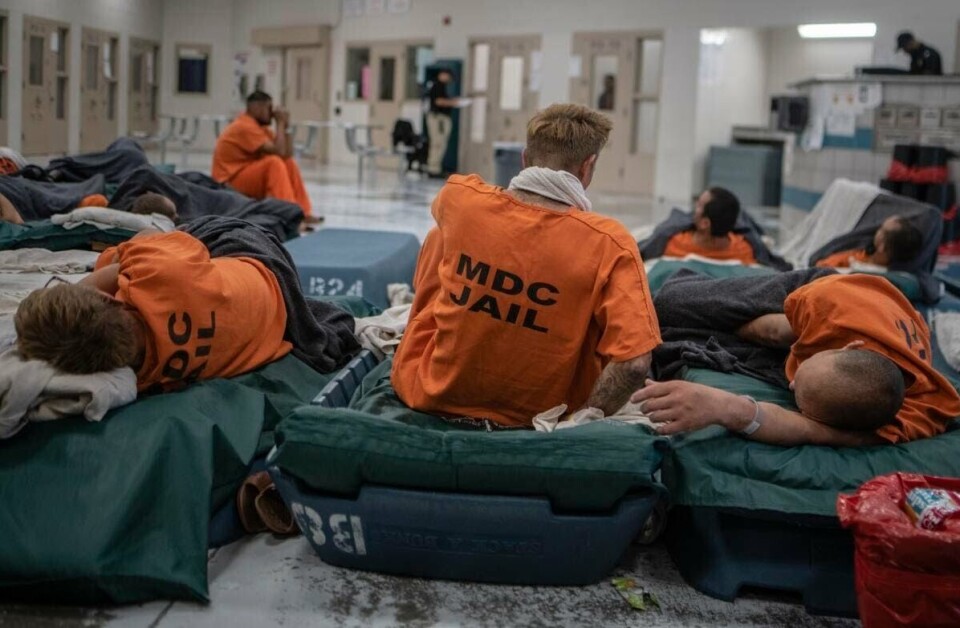
“My clients describe withdrawing from opioids in MDC as ‘hell.’ Lying on a boat surrounded by other people, vomiting, defecating, wracked with chills, aches and anxiety,” Loewe said. “My clients have died withdrawing from opioids in MDC. This is preventable suffering. It can be stopped with Suboxone, which stops withdrawal.”
She said MDC has released people with “little or no information” on filling other kinds of prescriptions and pointed out that Suboxone can be “picked up at Smith’s or Walgreens just like penicillin.” Loewe said that by failing to treat all withdrawals with medication like Suboxone, UNMH “is being deliberately indifferent to their serious medical need.”
McNease said they prioritize Suboxone prescriptions: firstly, to those who are booked with an existing prescription, secondly to those booked in withdrawal and thirdly to those who “could benefit” from the drug to stay sober.
He said they started giving the drug to the first group on Dec. 15 and to the second group in January. McNease said they need more space and staff to monitor inmates being given Suboxone.
He said UNMH hired an addiction specialist to start a addiction clinic at the facility that would oversee the process from intake to discharge and “ramp up” the capacity of those they can treat. McNease said “within the next month” they should be able to increase Suboxone prescriptions and begin doing them seven days a week.
Progress
McNease said there have been successes in increasing staffing and patient care since the audit.
He said staff vacancies have gone down from 23% to 12% since September, with only 16 medical staff positions and two psychiatry vacancies to fill. McNease said wound care is now being monitored by a supervisor to make sure inmates are treated “in a timely manner.”
He said UNMH has also redone the sick-call process to triage the needs more efficiently, categorizing them as urgent or emergent. McNease said there are also more scheduled, regular, checks on inmates.
He said to measure success and inconsistencies, consultants have been hired to measure the improvements being made in the medical care at the facility.
“We’ve instituted those changes to be able to make sure that we’re trying to meet the needs of all the folks out there,” McNease said.
Loewe said she has also noticed improvements, like correctional officers communicating better with medical staff to alert them of an issue. She said Anandkumar’s report makes it clear that there are “really committed people on the ground, working to make that difference” in health care at MDC.
But, Loewe said, concerning stories — like the deaths of Olivia Martinez and Pete Salazar — continue to emerge. Officials have not released a cause of death in either case.
Loewe said Martinez, who was booked on an unsubstantiated auto theft charge, was detoxing. She said Martinez died on Christmas in a cell by herself.
Loewe said Martinez had no watch officer at the time, another violation of the court order.
“I think that (UNMH) will make changes, and they will make health care at the jail better. I think that there’s a real commitment to making it a part of our community health care system,” she said. “... But now we need to see the changes get made.”


