
Featured
Culinary teachers in Albuquerque suffer as federal grant money fails to flow to classrooms




Published
Modified
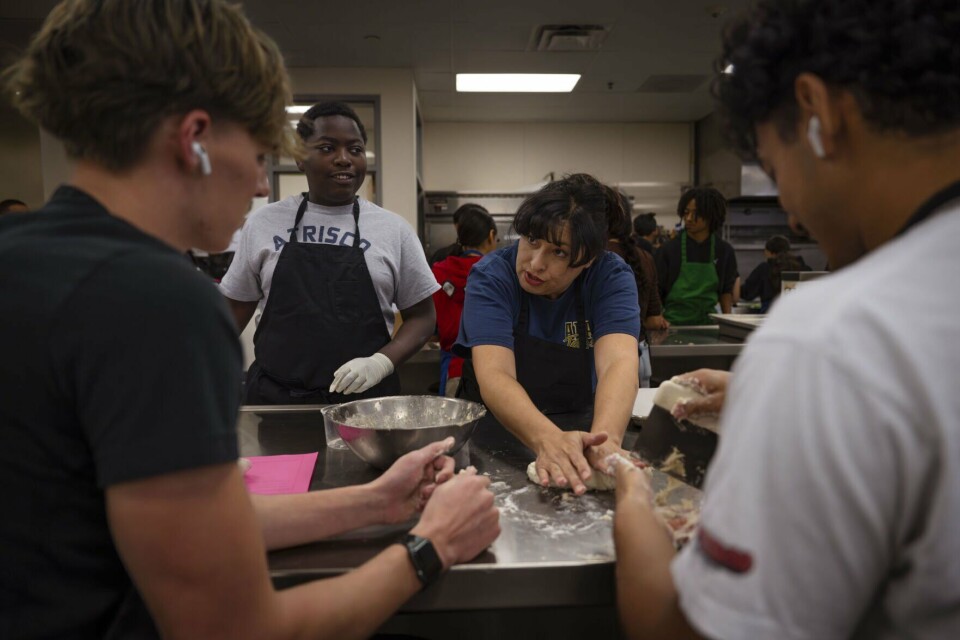
Before she taught culinary classes at Atrisco Heritage Academy High School, Catherine Lind worked as a chef at hotels and restaurants across Albuquerque.
“I love being a teacher, and I love the students, and that’s why I come back every day,” she said. “But the hoops that you have to jump through … is ridiculous.”
While Lind, a certified chef and alumna of Central New Mexico Community College and New Mexico State University, loves her students, the difficulties of her job with Albuquerque Public Schools could soon lead her back to the service industry.
“I actually redid my resume not too long ago. I don’t know if I’m supposed to say that, because I’m still working with APS,” she said.
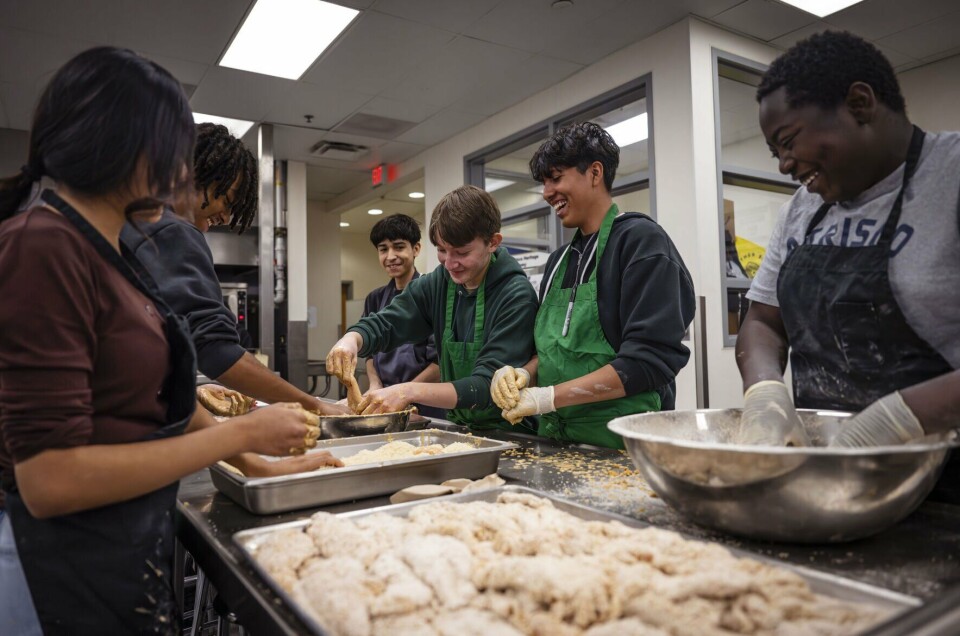
But she’s not the only teacher frustrated with the district. Across APS, culinary teachers are struggling to keep their classrooms stocked with equipment and ingredients.
The issue stems from a federal funding stream teachers are struggling to access: the Perkins grant, which is used to provide Career and Technical Education courses, or CTE. APS defines CTE courses as “designed to equip students for both college and career success by offering hands-on learning and real-world experiences across a wide range of career pathways.”
For Lind, the missing funding means paying out of her own pocket for ingredients and other groceries and waiting for reimbursement.
“This is the first job that I’ve ever had in my life where I have to spend my own money and then wait for a check,” she said.
APS did not make staff available for an interview.
In a statement, the district said that the funds are harder to access because of a federal case around money laundering and bribery against a former New Mexico House majority leader and APS staffer.
“We’ve faced increased scrutiny for this grant since our Executive Director of Procurement discovered financial irregularities that led to the criminal case against former APS employee Sheryl Williams Stapleton in 2021,” district spokesperson Martin Salazar said in a statement. “Since then, we’ve revamped our procurement process and internal controls.”
However, the district’s response isn’t satisfying for the Albuquerque Teachers Federation, which estimates that over $1 million in funding hasn’t been released.
“One way or the other, we need a resolution. These classes are important, but they require funds. Culinary arts classes need groceries. Automotive technology classes need tools. Woods’ classes need raw materials,” Ellen Bernstein, longtime union president, said in a statement. “Teachers need APS to step up.”
For its part, the state’s Public Education Department said it has been actively working with APS “to ensure that the district’s Career and Technical Education (CTE) grant application and CTE programming meet all federal and state requirements.”
“The PED has authorized the district to obligate funds and continues to offer technical assistance and support throughout this process,” department spokesperson Janelle García wrote in a statement. “The PED understands that the funding referenced is not preventing CTE programming and services from being provided to students.”
The bureaucracy is frustrating for Andrea Serda, whose students haven’t been able to return to the kitchen in three weeks because of plumbing issues and a broken ice machine, which she used a Perkins grant to pay for last school year ago.
“Now that the ice machine and the sinks aren’t working, I’m having to replan all my lesson plans,” she said. “Obviously, we can’t get into the labs and then cook the pastas and sauces like we were planning to.”
She will be able to do a soup unit with her students this school year because of the stock pots she purchased with the Perkins grant.
However, those pots didn’t show up until July, after the end of the last school year, and eight months after she submitted the grant paperwork.
“Basically, we can use it for the next year. So it’s just kind of frustrating,” she said, adding that the money can’t be used quickly when equipment breaks and has to be replaced.
Similar issues are playing out at Rio Grande High School for culinary teacher Janet Delgado, who has taught at APS for 16 years.
Because of the lack of funding, she had to ax an agriculture course she was teaching, which dealt with the “farm to table” part of the culinary curriculum.
“I don’t have that income,” she said. “And the students don’t have that class.”
Delgado also questioned the legitimacy of the district’s reasoning for the increased scrutiny around the grant funding.
“I wrote (for grants) under Sheryl Williams, and I can say that we can get over that excuse, right? It’s time. It doesn’t matter what Sheryl did. I mean, we just keep blaming Sheryl,” she said. “It’s unacceptable.”
Delgado also questioned why the district would hold up funding for programs when there’s an increased demand for CTE courses, and added that the impact of the unreleased funds would hurt more than just culinary teachers.
“Are we in the position to leave a million dollars for CTE programs on the table?” she said. “CTE is what keeps students in school elective classes.”
Editor’s Note: The story has been updated with the correct spelling of Catherine Lind's name.


