Featured
Juniper, elm and oak, oh my! Here's a look at Albuquerque's pollen outlook for spring

Tuesday marked the spring equinox and, as we all know, spring means allergy season.
According to data from the Centers for Disease Control and Prevention, almost a quarter of adults, and roughly 18% of children in the U.S. suffer from seasonal allergies.
To get an idea of what to expect for this year’s allergy season, and what you can do to mitigate symptoms, the Journal spoke with Patrick Hudson, senior environmental health scientist at the city of Albuquerque’s Environmental Health Department, and Nicole Henry, a pharmacist with CVS Health.
What’s the pollen outlook for spring and summer?
“Juniper has been high lately, along with elm and oak,” Hudson said. “But … the sort of periods of anthesis, that is when the trees release their pollen, are much shorter for elm and oak … if you look … around town, they’re mostly going about business and making the fruit that are the result of the pollination that happened in previous weeks. Right now, we’re shifting more toward cottonwood. … April and May we’ll see a mulberry spike, as those are popular plants that have been planted all about town. And as we move more into June and July, we’ll see a shift towards grasses and shrubs.”
How does the weather affect pollen?
“When it’s windy, like it … tends to be this time of year, that increases the sort of carrying capacity of the air to lift pollen and transport it about,” Hudson said. “And the species that we’re looking at … are wind pollinator species, they’re species that depend on wind transport to get their pollen when they need it to go for reproductive success. And, generally, that’s a strategy of, produce a ton of pollen and throw it out to the wind, and you’ll likely have some success generating offspring.”
Hudson said wind pollen is the most abundant and triggers allergies more than pollination that relies on insects and animals, as those methods are more “controlled pollination events.”
“Also with precipitation, the more available water there is on the landscape, the more water plants have access to be metabolically active, and physiologically functional. So that’s a fancy way of saying plants need water to do what they do, and for pretty much everything that they do, and that includes making pollen and releasing it.”
Hudson added meteorological data shows snowpack at slightly higher than the 20-year average, meaning more moisture.
“If it’s windy and if there are periods of wetness that give plants the opportunity to make pollen, then we would expect pollen counts to go up accordingly,” Hudson said.
What can you do to mitigate symptoms?
Nicole Henry shared tips to avoid suffering this season.
- Wash your hands frequently, particularly if you’ve been gardening or spending a lot of time outside.
- Stay on top of regular hygiene as well as diet and exercise to stay healthy.
- Keep an eye on your pets, especially if they go in and out frequently and can catch pollen in their fur.
- Visit your local pharmacy to get the right medication for your symptoms. Pharmacists can recommend over-the-counter products such as antihistamines, decongestants and corticosteroids or refer patients to a clinic to get an appointment for an inhaler if necessary.
To stay up to date with the current pollen conditions, subscribe to the city’s daily email alerts or check out the current conditions online.
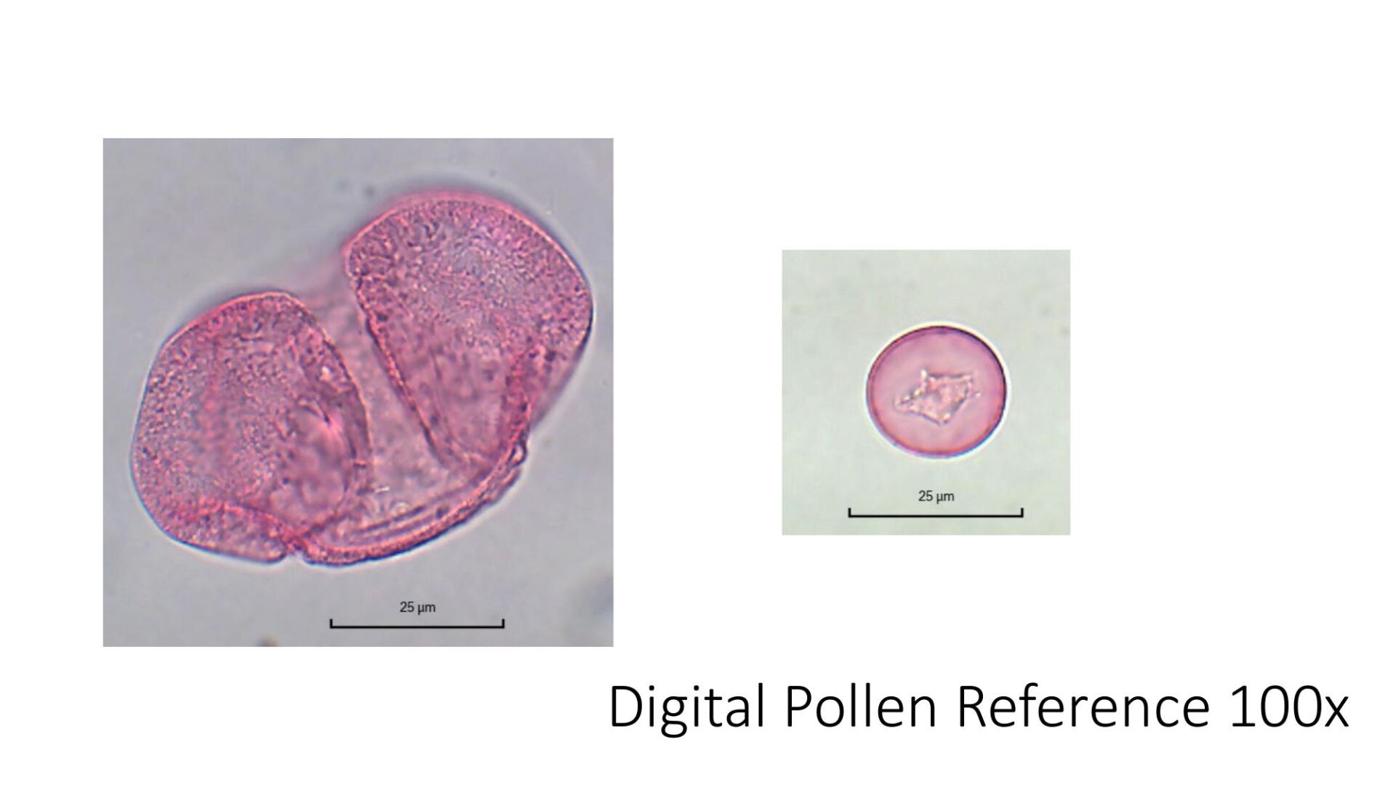
Pollen zoomed in 100x
Download PDF