
Featured
Journal Poll: Keller's approval rating slips as he seeks third term as mayor

Published
Modified
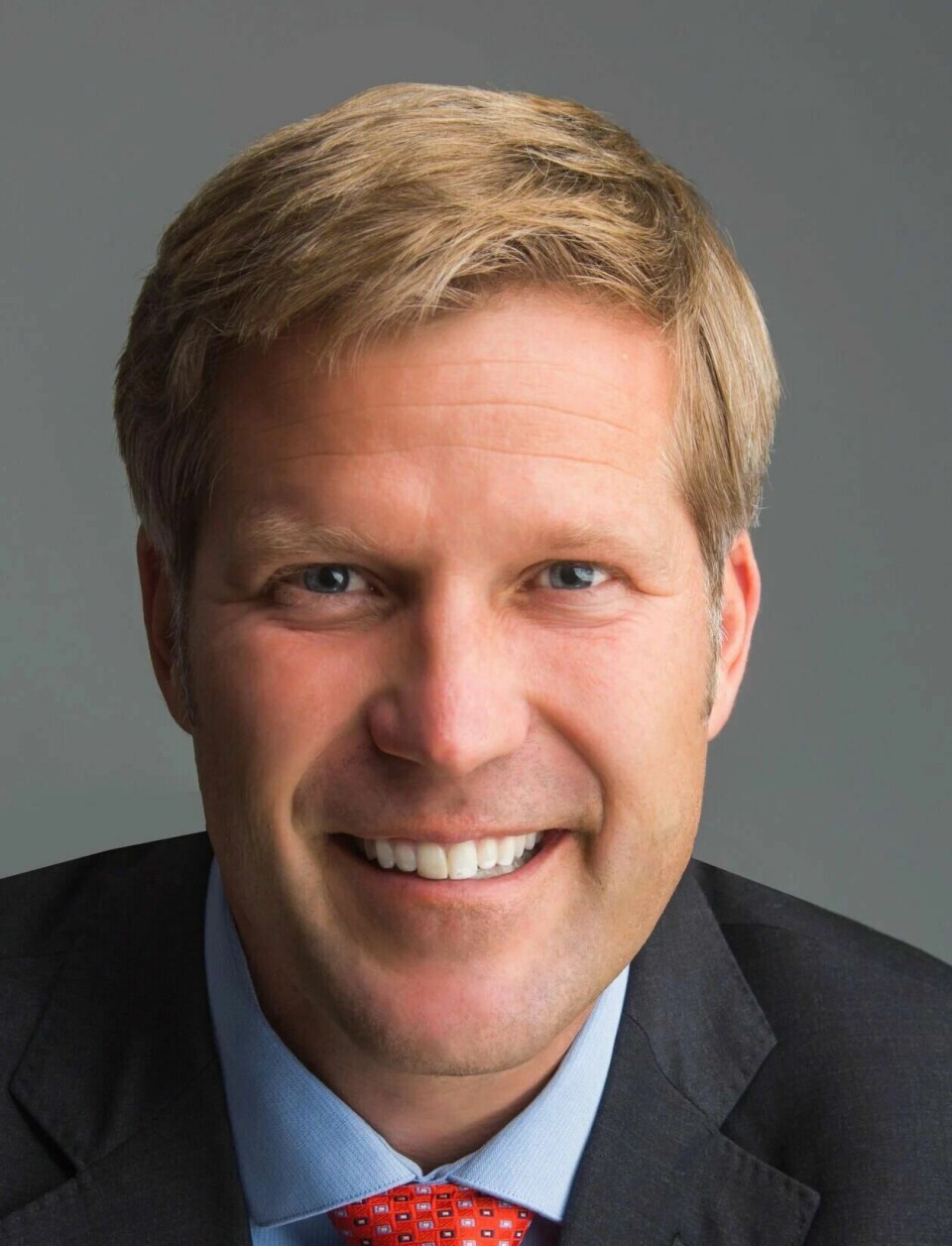
While Tim Keller has a solid lead in his bid to win reelection as Albuquerque’s mayor, less than half of city voters approve of the job he’s done over the last seven-plus years, a new Journal Poll found.

A total of 47% of voters surveyed expressed disapproval of Keller’s job performance, while 42% approved of the way he has handled being mayor. The remaining voters were unsure or declined to say.
The poll results continue a steady decline in Keller’s approval rating.
His approval rating was at 50% in October 2021, just before he won reelection to a second term as mayor. It was even higher earlier in his first term, as 61% of Albuquerque voters approved of Keller’s job performance in September 2018.

Despite the declining approval rating, Keller still holds a sizable lead in his bid for an unprecedented third consecutive term as mayor. A recent Journal Poll found 29% of proven and likely voters said they planned to vote for Keller in this year’s election, with the next closest candidate in the seven-way race receiving 16% voter support.
Brian Sanderoff, the president of Albuquerque-based Research & Polling Inc., which conducted the poll, said it’s difficult for elected officials to maintain high approval ratings after multiple years on the job.
But Sanderoff also pointed out that 46% of the Albuquerque voters who disapproved of Keller’s job performance said they were undecided about who they planned to vote for in the Nov. 4 local election.
“They disapprove of him, but they haven’t chosen a candidate,” he said.

Of those who approved of Keller’s job performance, in contrast, most said they planned to vote for the mayor. Only 22% of those voters were undecided.
Not surprisingly, Keller’s approval rating is higher among registered Democratic voters than Republicans. A total of 59% of Democrats surveyed said they supported Keller’s job performance, compared to just 14% of Republicans.
Independent voters, or those who declined to affiliate with a political party, were nearly evenly split in their views.
Among self-reported liberal voters, 70% approved of the mayor’s job performance compared to only 15% of conservatives, while political moderates were evenly split.
Albuquerque’s municipal elections are technically nonpartisan, but Keller was elected as state auditor as a Democrat in 2014, after previously representing an Albuquerque-based state Senate seat for six years.
As mayor of New Mexico’s largest city since late 2017, Keller has faced scrutiny and criticism over his handling of issues related to crime and homelessness. While the mayor’s administration has increased spending on shelters and affordable housing, its enforcement of public camping laws against the homeless has sparked a legal battle.
Keller has also doubled down on protecting immigrants’ rights in Albuquerque, even as President Donald Trump’s administration has listed the city as among 18 sanctuary jurisdictions nationwide.
The mayor signed an executive order in July that expanded on an existing city resolution barring employees from collaborating with federal immigration officials, except when required to do so by a court order.
Tepid views on city’s economy
Despite city officials’ efforts to revitalize the Downtown area and lure high-tech companies, most Albuquerque voters have a lukewarm view of the strength of the city’s economy.
Half of likely voters surveyed over a week-long period described the strength of Albuquerque’s economy as fair, while just 27% described it as good or excellent. Roughly 22% of voters surveyed said the city’s economy was in poor shape.
The results to this survey question were nearly identical to the Journal Poll conducted four years ago, prior to the city election. For that reason, Sanderoff said the voters’ assessment of the strength of the economy has not changed during Keller’s most recent term.
Albuquerque’s unemployment rate was at 5% as of July, according to U.S. Bureau of Labor Statistics, which was slightly less than the statewide average of 5.2%.
The city recently landed a big economic investment, when California-based Pacific Fusion announced it had selected Albuquerque’s Mesa del Sol to build a $1 billion research and manufacturing campus.
Keller described the announcement as a “shot-in-the-arm booster” for the city’s economy, as some previous high-profile economic development projects in Albuquerque ended up fizzling.
Meanwhile, the Journal Poll also found a correlation between Albuquerque voters’ views of the city economy and their views of the mayor.
Among voters who approved of Keller’s job performance, 34% rated the strength of the city’s economy as good and just 17% described it as poor. In contrast, only 19% of the voters who disapproved of Keller’s performance rated Albuquerque’s economy as good while 27% graded it as poor.
Methodology
The Journal Poll is based on a random sample of 514 voters who cast ballots in the 2021 and/or 2023 local government election, and a sample of adults who registered to vote since January 2024 and who said they are likely to vote in the upcoming local government election.
To ensure a representative sample, Research & Polling, Inc. sets quotas for race, gender, and age, and weights by education level and party affiliation, if necessary, based on traditional voting patterns in local government elections.
The poll was conducted Sept. 19 through Sept. 26. The voter sample size of 514 has a margin of error of plus or minus 4.3 percentage points. The margin of error grows for subsamples.
All interviews were conducted by live, professional interviewers, based in Albuquerque, with multiple callbacks to individuals who did not initially answer the phone.
Both cellphone numbers (96%) and landlines (4%) of likely voters were used.


