
Featured
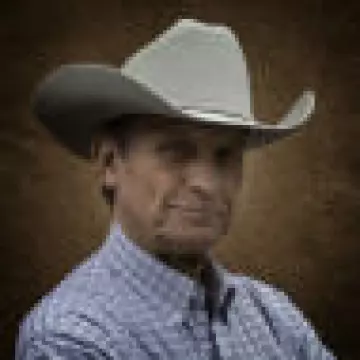
Hell of a ride: Steve Shaw's love of the West has taken him from horseback adventures to film fest accolades


Published
Modified
TIJERAS — Steve Shaw grew up in Southern California in the 1950s when Westerns were still a major genre on the big screen and were riding roughshod over the competition in the fledgling television industry.
In 1958, seven of the top-10 rated TV series were Westerns.
Shaw’s favorite TV Western was “The Rifleman,” starring Chuck Connors, but he was also partial to Hugh O’Brian in “The Life and Legend of Wyatt Earp” and Fess Parker in the Disney TV miniseries about Davy Crockett.
Hell of a ride: Steve Shaw's love of the West has taken him from horseback adventures to film fest accolades
As a kid, he was mesmerized by reruns of movies such as 1939’s “Jesse James,” with Tyrone Power in the title role, and 1941’s “They Died With Their Boots On” featuring Errol Flynn as George Armstrong Custer.
“And of course I loved John Wayne,” Shaw, 74, said. “I have always been influenced by the movies and TV.”
So, it’s no big surprise that Shaw would get around to trying his hand at Western movies.
“Goin’ Home,” a 91-minute Western he filmed over 15 days in 2021 and then spent 2½ years editing, has racked up 27 awards on the film-festival circuit in 2023 and 2024.
It won nine awards alone at The Wild Bunch Film Festival in Tucson in September 2023 — including best action Western feature film.
Naturally, Shaw, who wrote and directed the movie, is pleased, but also somewhat surprised by the accolades, which come from festivals as far away as Berlin, Tokyo, Rome and Edinburgh, Scotland.
“It’s not ‘Tombstone,’ ” he said of his film. “It’s not ‘Quigley Down Under.’ ”
“Goin’ Home” is about a troop of U.S. cavalrymen assigned to pursue a band of Apaches who have jumped the reservation to avenge the murder of an Apache girl. Shaw describes the soldiers as obnoxious, ill-tempered and bigoted.
“They have a young second lieutenant just out of West Point, and they don’t like him,” Shaw said. “They have an Apache scout, and they don’t like him either.”
However, duty, honor, respect and comradery emerge when the men are suddenly confronted by a superior number of Apaches.
Shaw said his movie was inspired by director John Ford’s cavalry trilogy — 1948’s “Fort Apache,” 1949’s “She Wore a Yellow Ribbon” and 1950’s “Rio Grande,” all of which starred John Wayne.
“I wanted to do a John Ford-John Wayne movie, except we don’t have John Wayne, and I’m not John Ford.”
Ridin’ the riverShaw doesn’t have to tell you he has a passion for the Old West. All you have to do is walk into the home he and his wife, Marcie, share in Tijeras’ Woodlands neighborhood.
It’s like visiting a museum of Western art and history. Everything from the imposing buffalo head hanging on a wall above a doorway to a plethora of paintings and sculptures to dinner plates and coffee mugs and rugs on the floor are Western themed.
The Shaws moved into the house in 2006 after coming here from Orange County, California.
“In California, our house was French country,” Marcie said. “Only Steve’s office was Western.” She has, however, become accustomed to her hell-bent-for-leather household decor.
“I fell in love with it,” she said. “It took us 17 years to acquire things. I helped pick everything out, and I figure out where to put it. In California, it didn’t fit. But here, it does.”
Marcie is from Pittsburgh. She and Steve met in October 1979 when he was in Pittsburgh for a business conference, and they married in March 1980. She soon discovered his fascination with the Old West.
“He showed me pictures of himself as a little boy,” she said. “He was standing outside his house, dressed as a cowboy.”
It would be impossible to be around Shaw long without learning about his fixation. While serving as an Air Force officer following graduation from the University of California, Long Beach, he requested an assignment to Ellsworth Air Force Base in Rapid City, South Dakota, just so he could be close to the area’s frontier history, which includes Wild Bill Hickok and Calamity Jane, Custer and Crazy Horse.
After the Air Force, Steve pursued a career in corporate America, working for Ford, Volkswagen, Sterling Motor Cars and other companies. Marcie worked in the healthcare industry.
In 1998, Steve talked Marcie into going on the “Hole-in-the-Wall” trail ride in Wyoming, although neither of them had much experience horseback.
“I slept on the ground,” Marcie said. “I rode in the rain.”
They both had a good time on the ride, but Marcie figured Steve owed her, so she insisted on a more genteel excursion, a trip on the steamboat Delta Queen.
In succeeding years, Steve and Marcie traveled by steamboat on the Mississippi, Ohio and Columbia rivers, clothed in 19th-century attire and accompanied by like-minded companions, also in costume. That was the genesis of Great American Adventures, a company started by the Shaws to offer historic tours, train trips and steamboat rides.
On one of the steamboat cruises, they met Steve Alexander, an actor and writer devoted to the history of George Armstrong Custer.
“He (Alexander) said, ‘You know, we do a ride to the Little Big Horn,’ ” Steve said.
It’s a wrapSteve and Marcie retired from their corporate jobs in the early 2000s. In 2004, Great American Adventures started organizing and hosting Old West horseback rides.
The first was “Custer’s Ride to Glory,” in which paying customers, attired in period costume, rode to the scene of Custer’s last stand near the Little Big Horn River in Montana.
“We did that ride for five years, but not consecutively,” Shaw said. “Steve Alexander portrayed Custer. We rode through the swollen Little Big Horn River.”
The company would eventually offer 17 different Old West rides, including “Jeremiah Johnson’s Wilderness Ride” in Jackson Hole, Wyoming; “Billy the Kid’s Regulator Ride” in Lincoln, New Mexico; “Quanah Parker’s Comanche Moon Ride” in Palo Duro Canyon, Texas; “Buffalo Bill Cody’s Great Scout Ride” in Cody, Wyoming; and “John Wayne’s Monument Valley Ride” in Monument Valley, Arizona.
One of Shaw’s favorite Western movies is 1993’s “Tombstone,” which starred Kurt Russell as legendary lawman Wyatt Earp, so he also created “Wyatt Earp’s Vendetta Ride” in Arizona.
“It was a five-day ride,” Shaw said. “We did it for 12 years. We went to the place where Wyatt killed (gunman and rustler) Curly Bill Brocius.”
Shaw’s movies, “Goin’ Home” and 2016’s “The Peacemakers: The Night of the Ripper,” grew out of Great American Adventures. Instead of paying the Shaws to go on historic horse rides, clients paid to appear in a Western movie.
Steve and Marcie were the crew, doing everything from hair, makeup and props to directing the action.
Of the 50 persons who appeared in “Goin’ Home,” 25 paid Shaw. He paid the others and fed all of them.
So far, the movie has been seen only by those attending festivals, but Shaw is working to make it available on Prime Video Direct.
“This has been a hell of a ride,” Shaw said of his venture into moviemaking. “I loved the writing and fidgeting with the script to fit the clients who were cast as actors. I’ve had to learn websites, close-captioning, movie music.” And patience.
Shaw said he and Marcie are now retired from leading historic tours and making movies.
“We are going back to traveling just for fun,” he said. “No more clients. If I could do another movie with less stress, I’d do it.”
But he doesn’t see that happening, so he says “Goin’ Home” is his last film.
And all he has to show for it is 27 awards, the most recent, received earlier this month, is for best director of a feature film, presented by the Rome (Italy) World Cinema Fest.


