
Featured
APS announces new electric buses for 2025-26 school year




Published
Modified
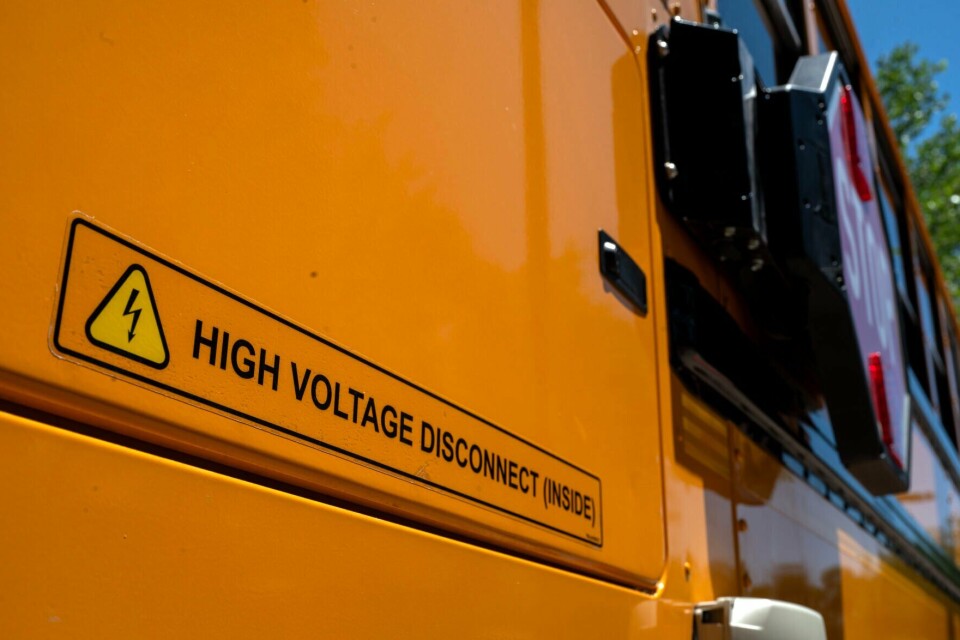
In a step toward a more sustainable future, Albuquerque Public Schools is set to roll out 20 new electric school buses, thanks to $6.9 million in federal funding.
The buses will become operational in the 2025-26 school year.
An event at Los Ranchos Elementary School on Tuesday to celebrate the initiative was organized by Moms Clean Air Force, or MCAF, a national organization with nearly 20,000 members in New Mexico. At the event, Sen. Martin Heinrich, D-N.M., APS Superintendent Gabriella Blakey and MCAF State Coordinator Giovanni Rossi spoke to a group of school children and teachers.
“By replacing diesel buses with electric ones, we’re directly reducing our children’s exposure to these harmful pollutants,” Rossi said, “ensuring they can breathe easier and live healthier lives.”
She also praised the collaboration between community organizations, parents and federal leaders, attributing the success of the initiative to their collective efforts.
“This achievement is not just a win for Albuquerque. It’s a testament to the power of community advocacy and the impact of strong federal support. The funding for these electric buses comes from federal climate investments supported by parents around the state who are concerned about the air our children breathe and the climate change challenges that they’ll inherit,” she said.
Heinrich said that MCAF has been instrumental in pushing for federal climate investments, such as those made possible through the Bipartisan Infrastructure Act.
During the event, Heinrich, a longtime advocate for sustainable infrastructure and co-chair of the Bicameral Electrification Caucus, reflected on the public health implications of diesel fumes, recalling his own childhood experiences on diesel-powered school buses.
“I remember sitting in the back, because that was like, those were the seats that you would fight over, but that’s also where the windows were down and the diesel fumes would come in every single day,” Heinrich recalled. “And now, knowing what we know today, we realize what a huge public health issue it is to be breathing diesel exhaust on a regular basis, and certainly not what we want for our kids.”
He praised the electric buses for not only improving air quality but also for their long-term cost-effectiveness, noting that the simplified mechanics of electric vehicles could lead to significant savings in maintenance costs.
“There are literally thousands of moving parts in a diesel engine, and they’re always breaking down. There’s a few dozen moving parts on a bus like this, so they can run many times as long,” Heinrich said.
Heinrich also talked about how electric buses have already been introduced in some of the state’s school districts.
“There are a bunch of districts that were in the first round. This was actually the second round of grants, so I think Las Cruces and a handful of others were in the first round. So it’s already started in places across the state,” he said.
Beyond school buses, Heinrich said he would also like to see the electrification of short-haul delivery trucks used by companies such as Amazon.
“Those also lend themselves to electrification, and we’re just seeing the manufacturers scale those up right now. But those will make a big difference in terms of pollution in neighborhoods, because those trucks have a lot of diesel emissions right now, and so switching those out makes a meaningful difference in the kind of air quality in your local neighborhood,” Heinrich said.
Blakey said APS expects to have 26 electric buses in operation by the next school year, and they will represent about 10% of the district’s total fleet.
“These buses represent our commitment to become a more sustainable district that is looking to be as environmentally friendly as possible,” she said. “We are excited to take this step, which will benefit the health of our students and staff, our community and the environment.”


